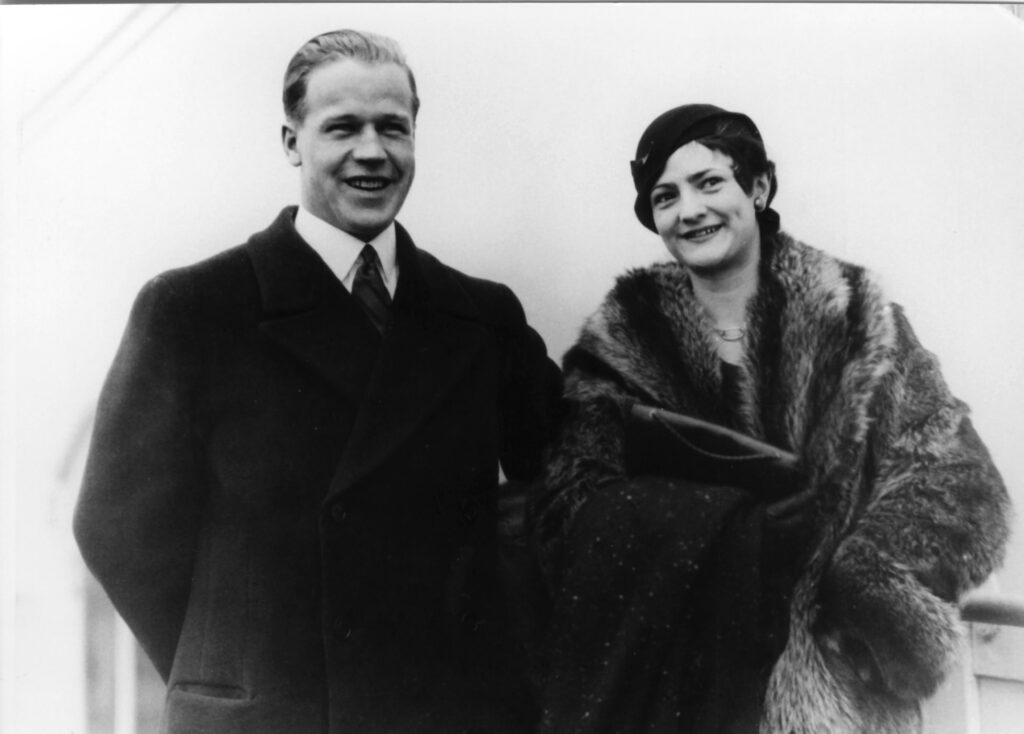
Wilkens, founder, president and CEO of telecommunications company WilTel, worked to challenge and outpace the “big three” at the time of AT&T, MCI and Sprint. His 3,500 employees worked with business communications to provide network solutions. “All I had was a gimmick to start out with, and that was putting fiber inside a pipe,” says Wilkens about his fiber-optics cable project that turned into a company.
Padilla was vice president of new markets business development for AT&T in Morristown, N.J. He stated in 1993 to Missouri S&T Magazine that “we have come to the age of The Jetsons,” when referring to a communications revolution that would affect our life as dramatically as interstate highways or televisions.
For some, it is hard to imagine a life without the communication devices we have today, but perhaps future Miners can pick up the mantle of the two and continue to develop new technologies.
]]>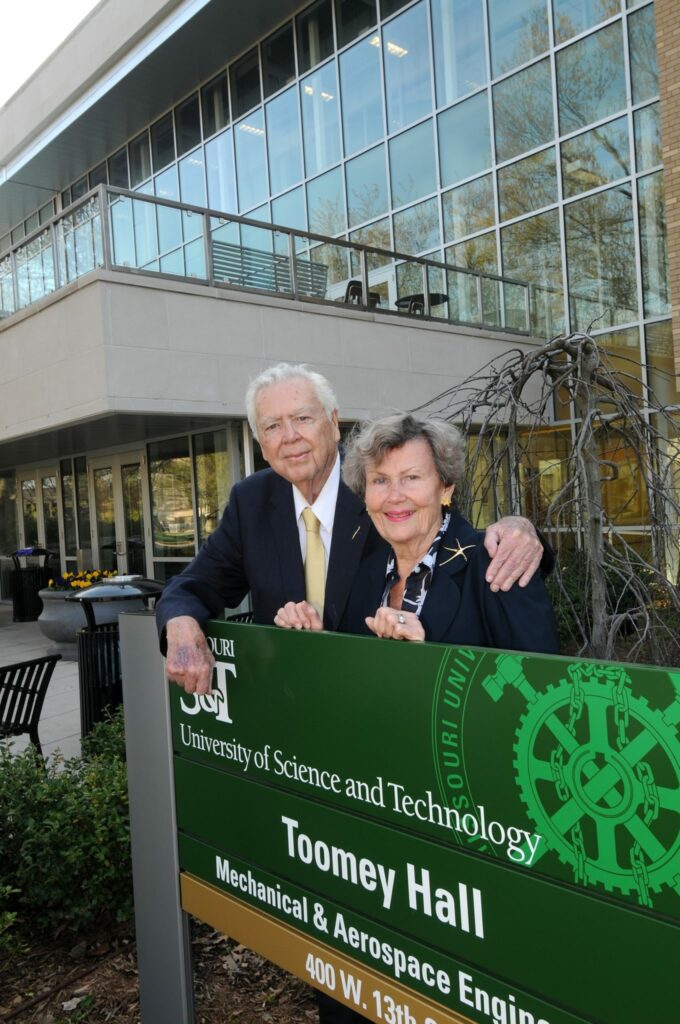
A registered professional engineer, John Toomey, who earned bachelor’s and master’s degrees in mechanical engineering in 1949 and 1951, founded both VSE Corp. and Starr Management Corp. He is a member of the Naval Institute and holds five patents for photographs, safety and missile equipment as well as a copyright on design and technical-drawing computer software.
]]>“There are very few eureka moments for me,” he explains. “I like to sit down with someone else and bounce ideas off them.” Apparently, the process works.
]]>Over the past 200 years, the loss of more than 70 million acres of wetlands in the Mississippi River Basin caused poor water quality, increased water pollution and flood damage and reduced wildlife habitat and biodiversity, Hey says.
]]>
Karl F. Hasselmann, who graduated in 1925 with a degree in mining engineering, was oil prospecting in Europe when he began researching how to use gravitational survey methods to locate offshore oil. After returning to the U.S., Hasselmann began drilling with his own company in the Gulf of Mexico and discovered one of the first oil pools in the Texas Gulf — a forerunner of the massive offshore developments to come worldwide. His name lives on in Miner history at Hasselmann Alumni House, named in honor of the surveyor.
]]>“I fine-tune what the engine sounds like, both inside and outside the car – I’m the composer of a symphony, in a way,” says Rusher. “I manually adjust exhaust pipes and record the engine sounds. The sound is a combination of the engine and exhaust system outputs, and there needs to be a balance between the two.”
]]>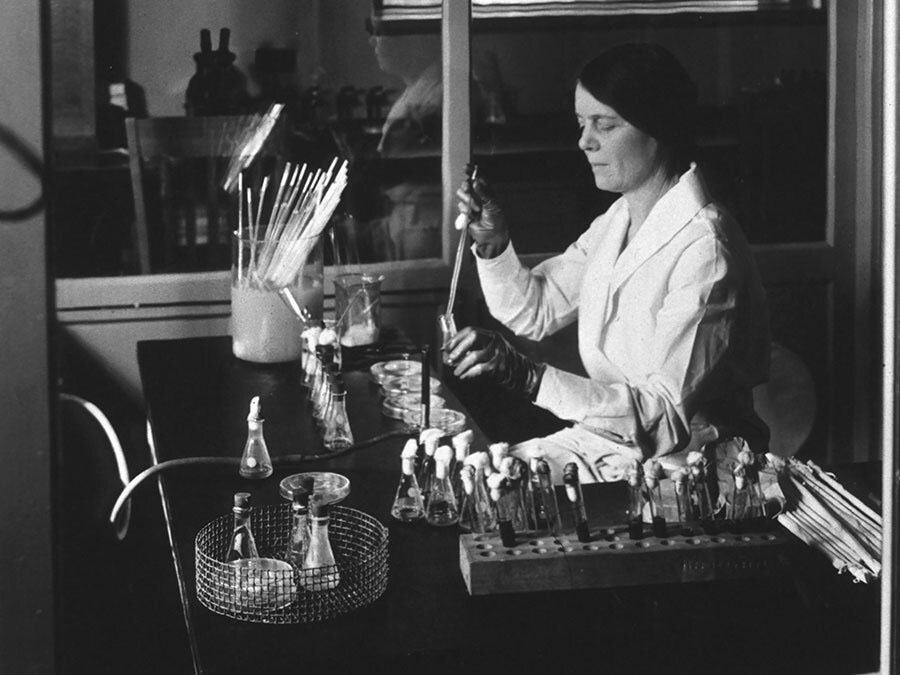
Dr. Ida Bengtson was the first woman the National Institutes of Health (NIH) hired as a scientist in 1916. For 30 years she served the NIH – and several communities throughout the U.S., including Rolla, as Dr. Kathleen Sheppard, associate professor of history at Missouri S&T, details in Selective Blindness: Ida Bengtson and the Treatment of Trachoma, published in Lady Science in 2018.
As Sheppard notes, Bengtson came to Rolla in 1924 to lead research on a blindness-causing eye disease named trachoma at the city’s hospital on 13th Street. She also worked as a lecturer in bacteriology at S&T and conducted research in lab space in Parker Hall’s basement.
Over 1,500 patients treated at the Rolla hospital benefitted from Bengtson’s research, and she shared the results of her work at a meeting of the Saint Louis Ophthalmic Society. Her work led to the creation of Rolla’s Trachoma Hospital, one of only four such hospitals in the country. (This building on Kingshighway is now home to S&T’s Rock Mechanics and Explosives Research Center.)
Bengtson worked in Rolla from 1924 to 1931 before moving on to work in the typhus unit of the NIH. She helped develop a vaccine for typhus and created the complement fixation test, a test still used today to detect Rocky Mountain spotted fever and other diseases.
“Bengtson is just one of those women whose successes became the disciplinary scaffolding that others would build upon,” Sheppard writes. “She contributed to multiple urgent projects because of her drive, her expertise, and her precision. Bengtson and her contemporaries laid the cornerstones of multiple fields and research lines, but few look for those cornerstones, which make finding sources about them almost impossible. Bengtson’s work on trachoma demonstrates the value of not just looking for ‘Female Firsts’ in science, but of understanding the breadth and depth of women’s contributions to multiple fields.”
]]>