Panopto Recorder will be installed on all classroom computers for Fall 2017.
To enable Panopto Recordings within Canvas, follow these steps for each course in which you will be using lecture capture:
- Login to Canvas and navigate to a course.
- Click Settings within the course menu.
- Select the Navigation tab at the top of the Settings page.
- Click-and-drag Panopto Recordings until it is within the top part of the course menu.
- Click Save.
More details for getting started with Panopto lecture capture can be found at:
http://edtech.mst.edu/support/panopto/
NOTE: The campus Tegrity license will be expiring on or around Dec 31, 2017. Until then, instructors can still use Tegrity lecture capture for recordings. EdTech recommends trying out Panopto!
For assistance with Panopto lecture capture, please contact Educational Technology (edtech@mst.edu). We’ll be glad to help!
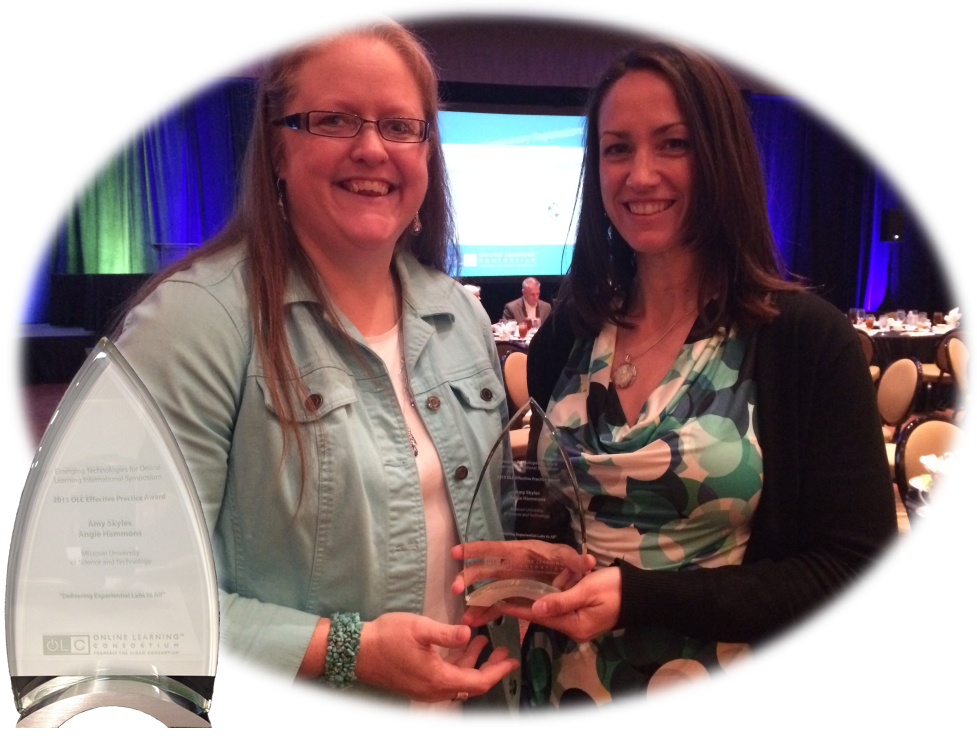
Angie Hammons (left) and Amy Skyles (right) pose with their Online Learning Consortium Effective Practice Award 2015.
Angie Hammons, Manager of Educational Technology at Missouri S&T, and Amy Skyles, an Instructional Designer for EdTech recently accepted the 2015 Sloan-C Effective Practice Award from the Online Learning Consortium. They received the award for their project on Delivering Experiential Labs To All (DELTA).
DELTA is a set of eLearning models, processes and strategies for redesigning traditional (on-campus, in-class) labs to a blended or fully online model. Several instructors, with help from Amy and Angie, have embraced this model in fields including biology, chemistry, circuits, materials testing, and nuclear engineering.
Congratulations to Amy and Angie for their hard work and effort!!
]]>Videos from the TLT 2015 Conference: http://tlt.mst.edu/tlt2015/abstracts/
CanvasCon Sessions: http://tlt.mst.edu/tlt2015/abstracts/canvasconabstracts/
We hope everyone who participated in our TLT 2015 conference was able to walk away with at least one new idea going forward!
We also look forward to seeing everyone back next year for the TLT 2016 Conference on March 17-18, 2016
]]>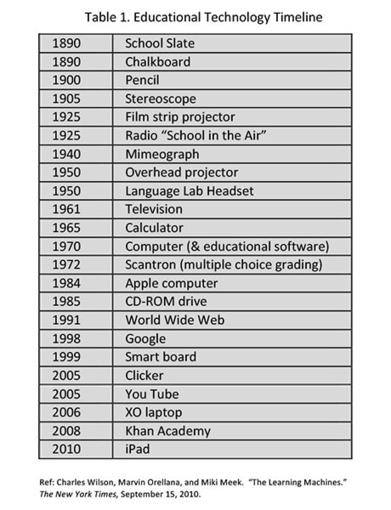
The educational tools that we choose often shape how we educate our students, so let’s choose them wisely with one eye on the future.
Source: www.edutopia.org
This same concept applies to a lot of lab courses. There’s some big machine which drives the lab activity because it’s there, we’ve paid for it, and it’s all we know. Don’t let the tools that we have limit the way we think about teaching.
]]>
At Missouri S&T, the experiential experience is a top priority. That’s what drives students to a STEM school with an engineering focus in a small town in Rural Missouri that’s more than an hour…
Source: blog.sloanconsortium.org
Here’s a look at laboratory redesign projects going on at S&T. We’ve got several courses piloting now and others under development.
]]> The Office of the Provost, along with Educational Technology (EdTech), is issuing a second call for participation in the 2013 eFellows program. This program is an opportunity for instructors to redesign their courses to incorporate more technology, with the overall goal of improving student performance.
This round of proposals will only be for Tier 2 and Tier 3 projects.
Tier 2 – Stepwise Redesign (up to $2,000) is an intermediate step between Tiers 1 and 3. It is smaller in scope than Tier 1, focusing on one or more aspects of a single course, rather than a full course redesign. A Tier 2 project could eventually lead to a course redesign over time.
Tier 3 – Teaching with Technology (up to $1,000) eFellows projects are about the adoption of technology and the teaching strategies to improve teaching and learning.
Interested participants are strongly encouraged to review the video of the 2013 eFellows Program Participation Workshop from the Teaching and Learning Technology Conference 2012. The presentation can be found at the link below, along with the PowerPoint slides:
http://edtech.mst.edu/events/tltconference2012/abstracts-room-124/#p3
EdTech also hosts an eLearning Community of Practice (eCoP) which is a peer learning community that coincides with the eFellows program and is especially helpful for instructors who are interested exploring ideas before attempting a full course redesign. Along with the eFellows, members of the eCoP will be invited to participate in a blended course, CyberEd (inside of Blackboard), that introduces essential concepts and best practices for eLearning. eCoP participants will receive consultation and assistance from EdTech staff on applying these practices to their courses, in small scale, at their option.
If you would like to request an application packet for the 2013 eFellows Program at the Tier 2 or Tier 3 level, please send a brief letter (email) of intent as described in the brochure linked below to Meg Brady (megbrady@mst.edu).
An instructional designer or technologist will be assigned to work with you to complete the application. Alternately, you can schedule an appointment or stop by EdTech U (Thursdays, 11 a.m. to 1 p.m. in IDE 105).
Applications are due no later than Friday, October 26, 2012.
]]>
Educational Technology is now accepting presentation proposals for the Sixth Annual Teaching and Learning Technology Conference, scheduled for March 14-15, 2013. Interested presenters can download a copy of the Call for Presentation form at the EdTech web site or click one of the links below:
Call for Presentations: Word Document
The theme for this year’s conference is Assessments – From Syllabus to Final. EdTech is looking for presentations that showcase how assessments have an impact on student learning at all stages of a course. However, EdTech will review ALL submissions regardless of content.
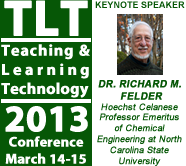
The opening keynote speaker will be Dr. Richard M. Felder, Hoechst Celanese Professor Emeritus of Chemical Engineering at North Carolina State University. Dr. Felder has many research interests, as outlined on his web site.
This year we will be offering several tracks for presenters and participants:
- Teaching with Technology – Enhancing the instructional process by including a technology component
- Blended Learning – Replacing some or all of the face-to-face communication in class with online tools
- Best Practices in Teaching Strategies – Pedagogical theories on effective teaching (with or without technology)
- “Hands-on” Activity – Computer labs are available for hands-on presentations or demonstrations
- K-12 Education – By popular request, we will be offering a few sessions geared towards K-12 instructors. If you would like to present towards this audience, please use the same form available through the links above.
Proposals will be accepted until Wednesday, October 31, 2012. Decisions regarding acceptance will be made by Friday, November 16, 2012.
]]>Summative and formative assessments are both important components to the learning process for both students and instructors. Summative assessments typically take place after the students have “learned” the material to gauge how well they actually learned the content (think standardized test for an example of summative assessment).
Formative assessments, by contrast, take place during the learning process, allowing students to practice the conceptual material while minimizing immediate accountability (formative assessments are often ungraded). Self- and peer-assessments are very effective types of formative assessments in the classroom.
A balanced implementation of summative and formative assessments will yield the greatest benefits for both students and instructors.
For more information about how formative and summative assessments might be useful to you, come to the eLearning Community of Practice on Wednesday, April 18, in Norwood Hall Room 208 from 2 – 3:30 p.m.!
(Snacks will be provided courtesy of EdTech)
]]>