There are so many mountains on the island, as well, because of the tectonic activity. Out in the country, there were hostels we stayed in where we were completely surrounded by mountains. I loved this because it gave us so many opportunities to hike! One of my favorite hikes was when I woke up early one morning to climb a mountain directly behind our hostel. It was peaceful and relaxing. I only got part way up because I didn’t give myself enough time, but one of the biggest takeaways I got from that hike actually had to do with Dr. Bryan’s class on folklore and mythology. In one our lectures, we talked a little bit about how the landscape shaped some of that folklore. Hiking that mountain, I could completely see how people thought there were trolls that lived there or that they would’ve seen fairies, so much that I started to believe it myself. I really wanted to see a troll in the rocks I was climbing on!
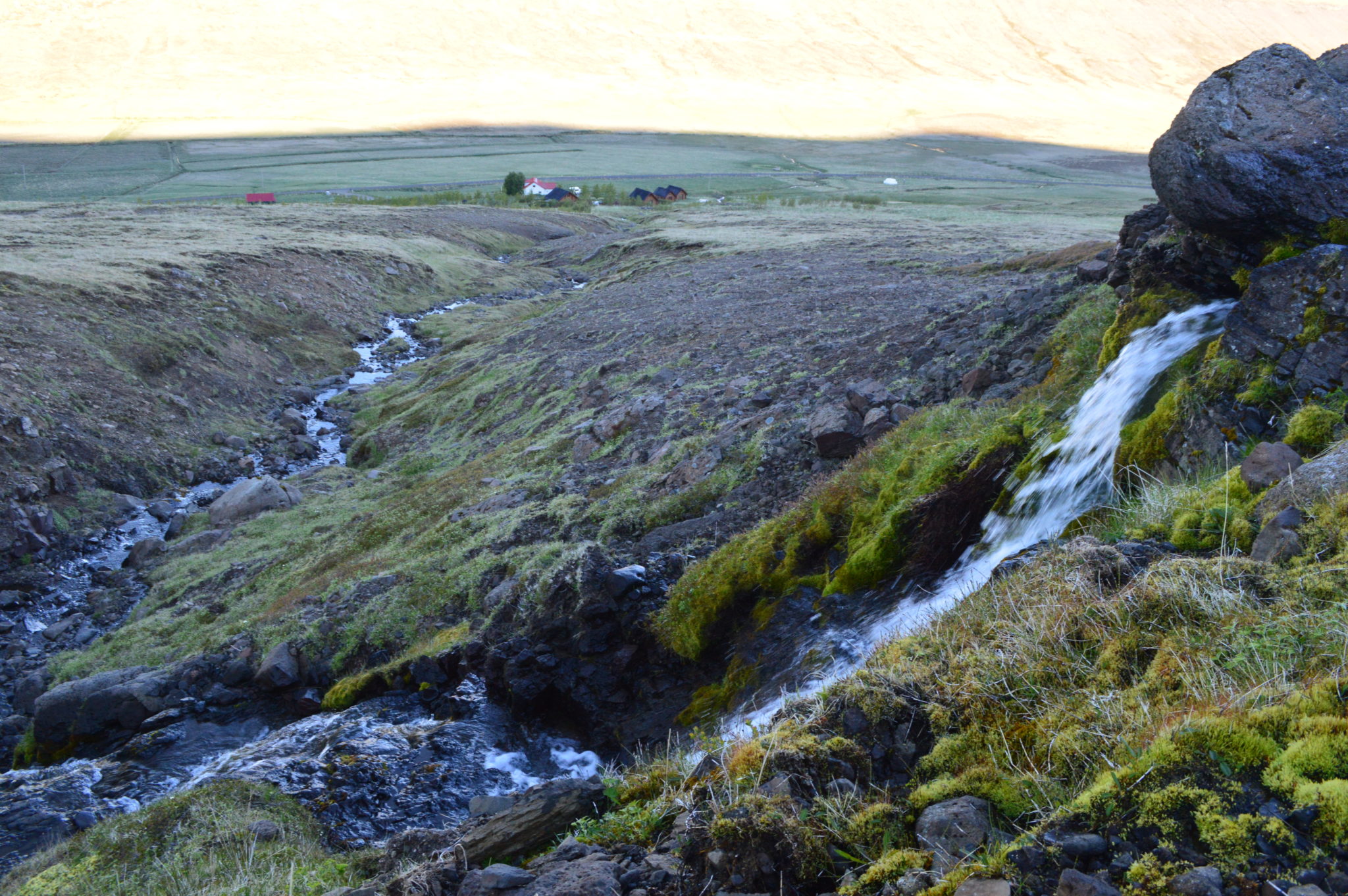
Morning hike behind our hostel. I wish I actually saw a troll!
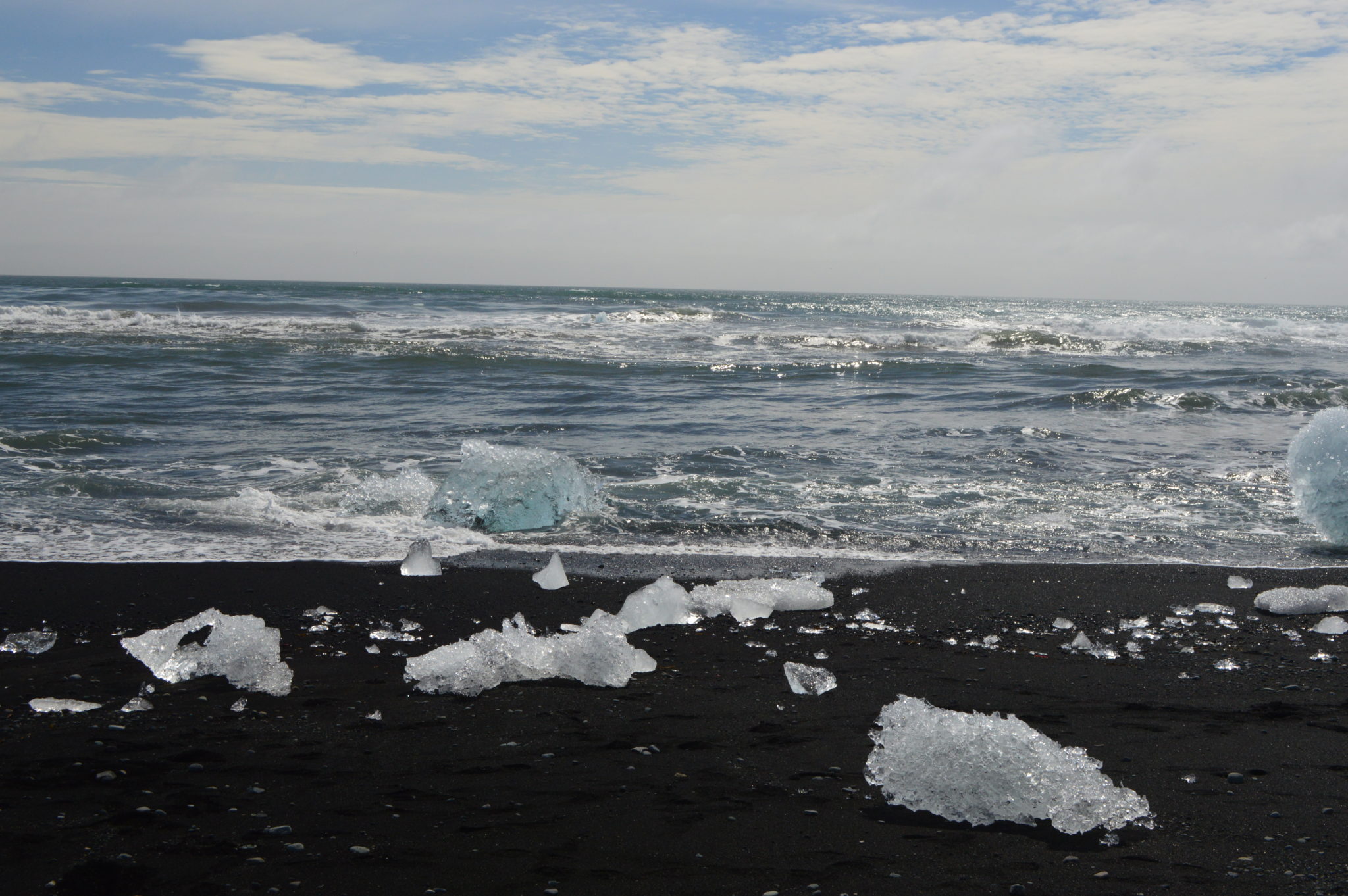
I never thought I’d see ice in the middle of June. Chunks of the Jökulsárlón glacier in the Atlantic
Glaciers have also helped shape the landscape of Iceland as well by shaping the mountains. I think the coolest thing about the mountains we saw were how many waterfalls there are! When the glaciers melted, they left behind numerous streams, most of which fall down the mountains. Some mountains would have 6 or 7 streams running down them. This also helps to form the numerous amounts of waterfalls Iceland has! We saw some incredible waterfalls. We saw some tall ones, small ones, powerful ones, adorable ones. We even saw the most powerful waterfall in Europe! I loved seeing the touristy waterfalls, but I liked seeing the waterfalls where we could get right up to them. One waterfall we went to, Goðafoss, we were able to climb around the stream before it fell off the cliff and as it flowed down the mountain again. We even drank from it (Iceland has extremely clean water- bottled water is literally just tap water).
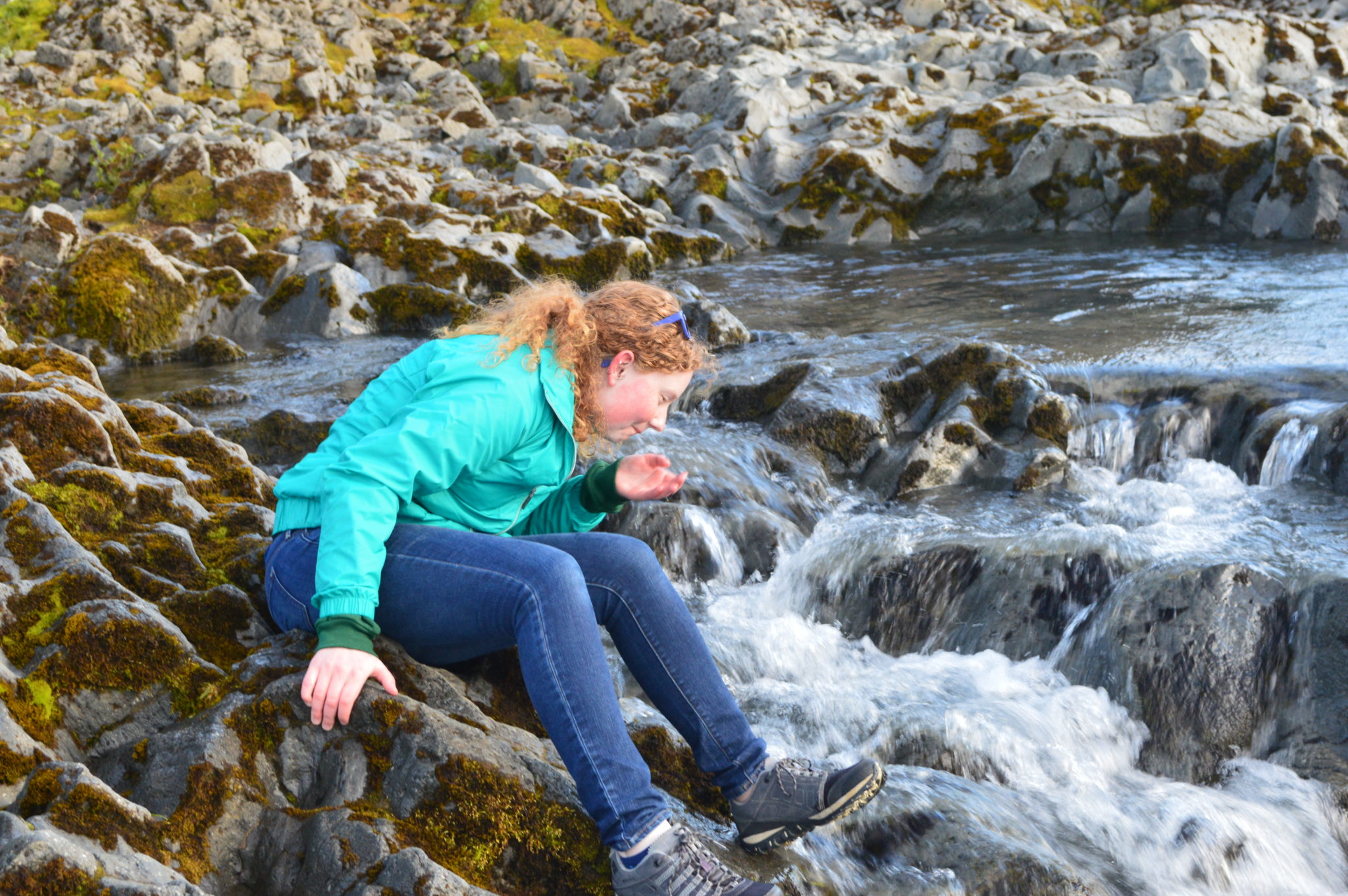
Enjoying the delicious water down stream of Goðafoss
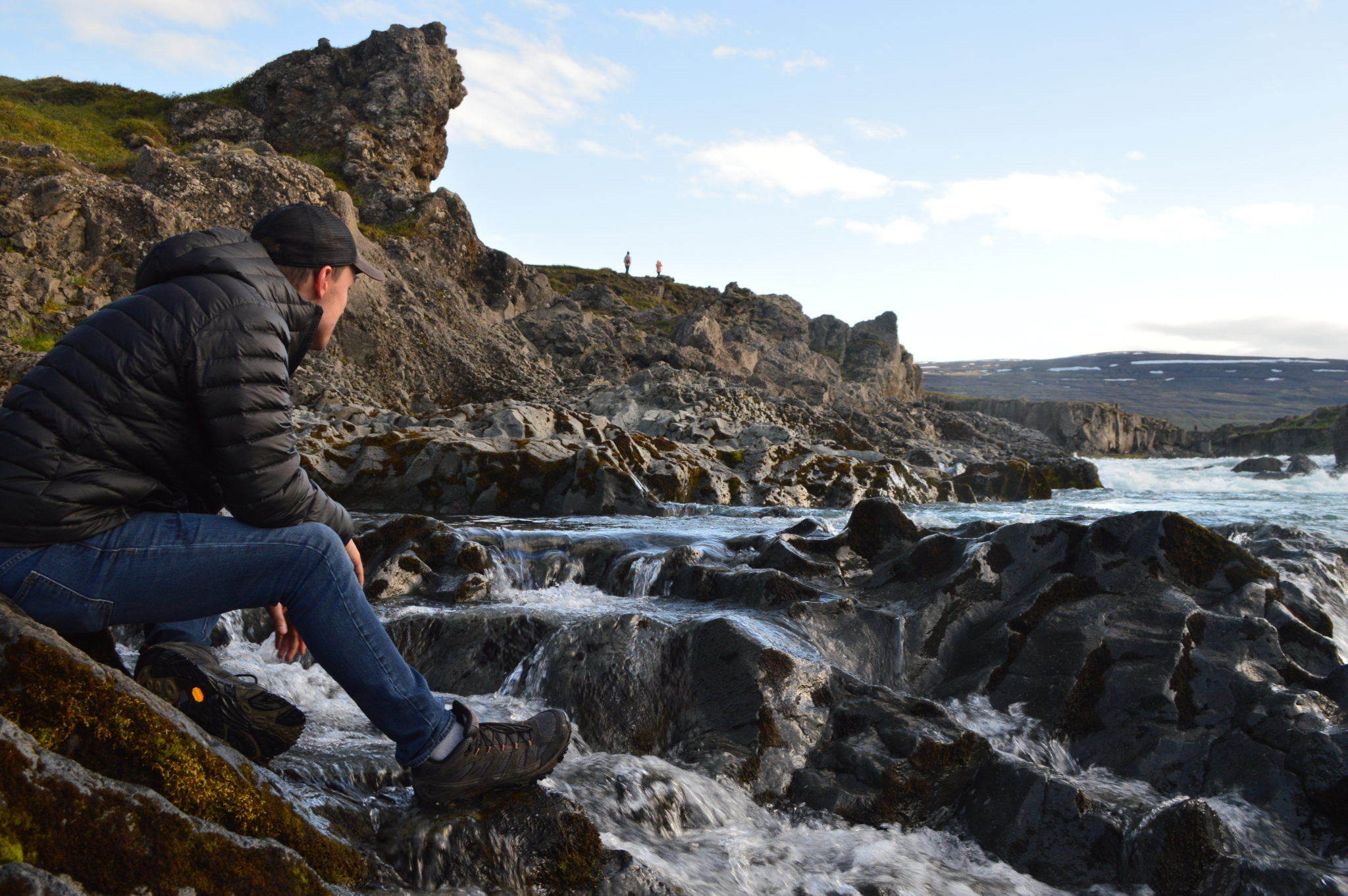
Lane admiring Goðafoss from down stream
I would absolutely go back to Iceland in a heart beat to explore all of the natural wonders it possesses. We only skimmed the surface of all the hiking and waterfalls and glaciers and endless nature Iceland has to offer.
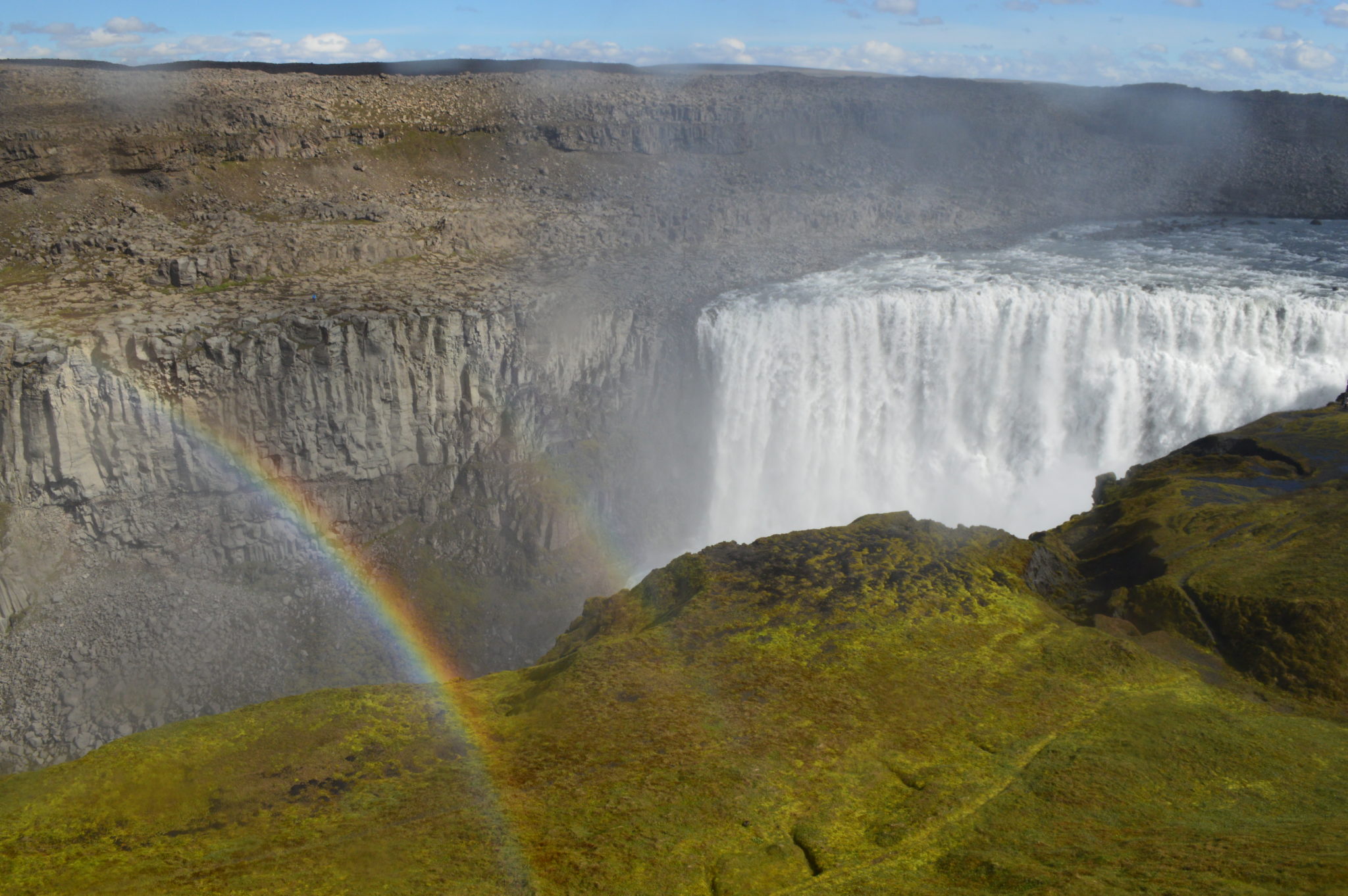
Dettifoss- the most powerful waterfall in Europe

Svartifoss
]]>
Gunner Gunnarsson was born and raised in Iceland in the late 1800s but moved to Denmark for his studies and to become a writer since the Danish education system was much better than Iceland’s at the time. He received 6 Nobel Prize nominations in literature and almost won in 1955. His most famous work was Guest the One-Eyed. It was turned into a silent film. It was the first Icelandic work to be turned into a movie, the first Icelandic film by a foreign director, and the second movie filmed in Iceland. Gunnarsson had a falling out with this director because of creative differences and didn’t end up going to the premiere of it, which was a two day event since the movie was 4 hours long.
Gunnarsson came back to Iceland after his career came to a halt to build his house on the east coast of Iceland. The house wasn’t as big as he originally wanted, but is still the largest single home built in Iceland. After a while, he no longer wanted to live there and donated it to the Icelandic government, which to this day is still the largest donation to the Icelandic government by an individual. The project of building the house took several ten thousand man hours of labor. One man spent 200 hours washing rocks for the outside walls. He refused to come visit the house once turned into a museum because he was triggered so hard. Gunnarsson also spent over $72 million (in today’s currency) on labor alone.
Down the hill from his house is the ruins of an old Augustinian monastery. The site was unusual that it had the monastic quarters right next to the church, which originally threw off archaeologists. Archaeologists also dug the remains very differently. They would dig a 5cm piece of section, draw what the remains looked like, then dig 5 more cm and do the same thing. This allowed them to removed the ruins and accurately recreate the site. Icelandic archaeologists are also able to accurately determine the time period of ruins based on the lava layers. There are distinct layers of different kinds of dirt that correspond to different volcanic eruptions. Whatever layer the ruins are located in is the time period of the ruins.
There were also over 300 human remains found in the cemetery in the church yard. Scientists were able to determine the gender, age, and different diseases of each body. Based on different diseases and treatments to fractured bones, they were able to determine that the monastery functioned as a hospital. They had around 100 patients living at the monastery at any given period of time. They treated broken bones, helped with pregnancies, and even had some patients with stage 3 syphilis.
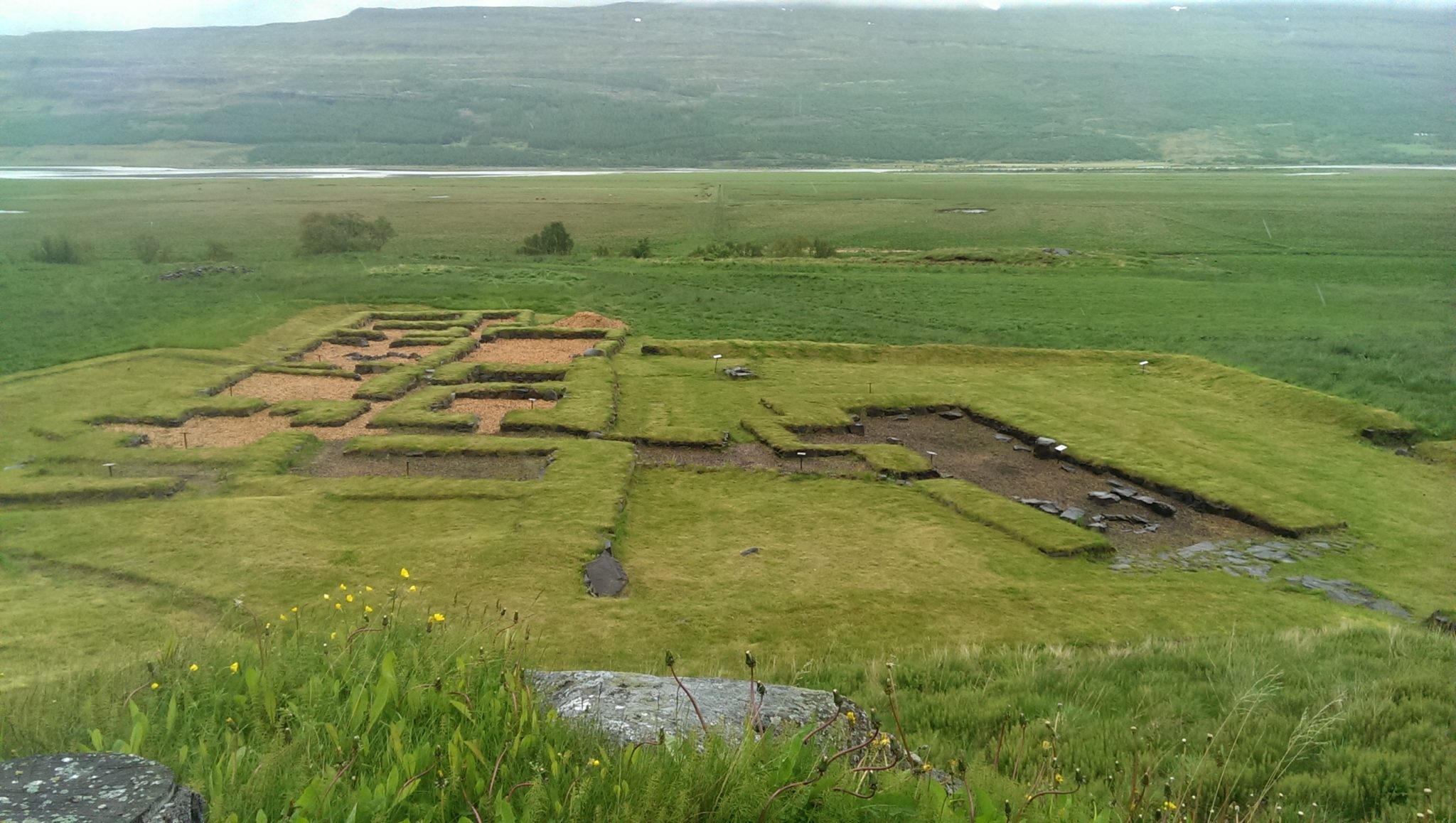
These are recreated ruins of the Augustinian monastery built in eastern Iceland. It was the last monastery built before the country converted to Lutheranism.
In the cemetery of the monastery, Dr. Bryan gave us a lecture talking about an old Icelandic Saga in which the valley we were standing in took place. The people of the saga ended up having to cross over the mountain that was behind the house we visited. Dr. Bryan also pointed out the only grave with a headstone there, belonging to Jón Hrak. There are many legends and folklore about him and they say that he was sort of the butt of everyone’s jokes, so much that instead of being buried east to west per tradition, he was buried north to south. Many Icelanders are familiar with this jingle about him:
Kalt er við kórbak,