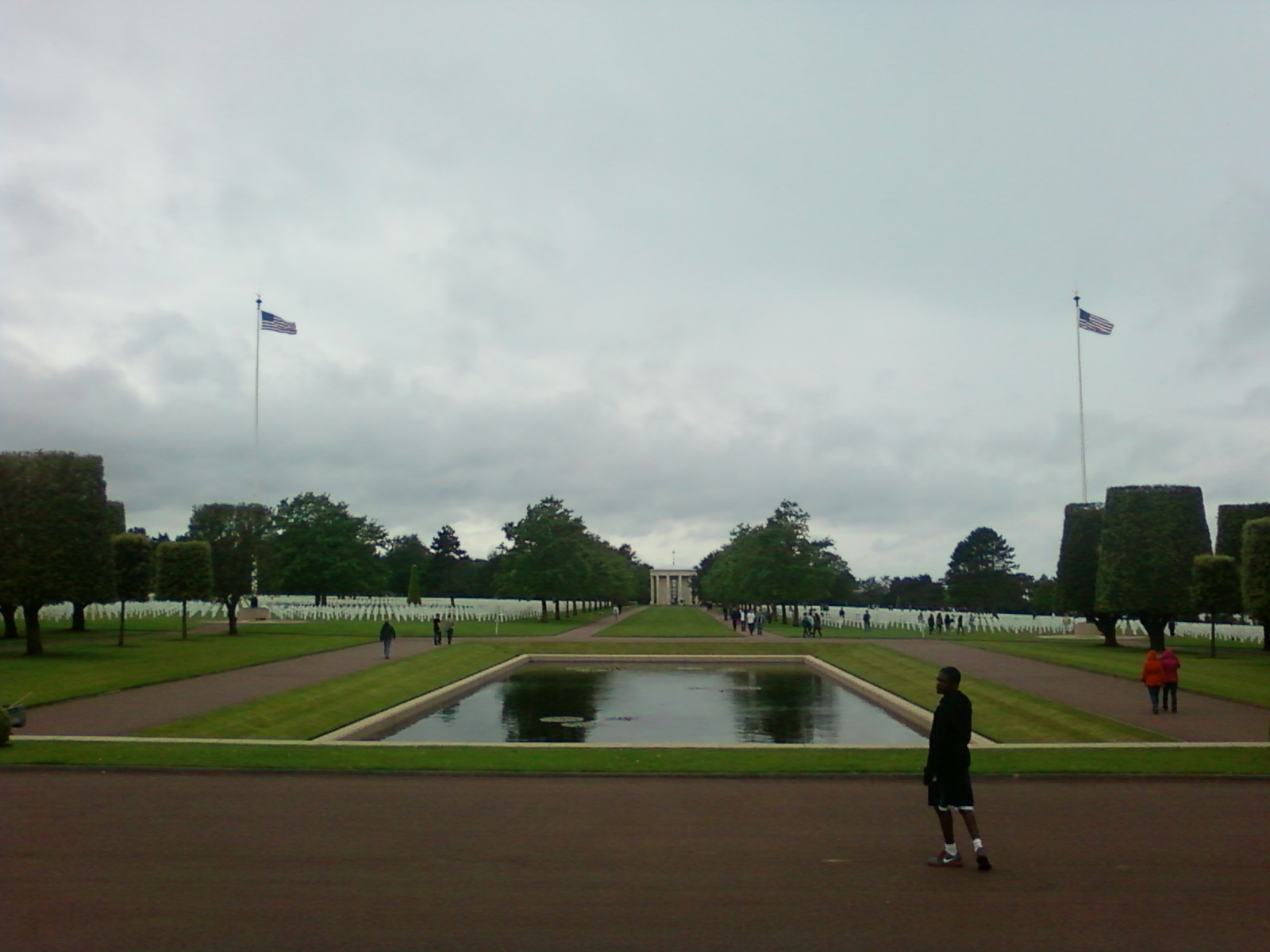
The American Cemetery
Taking a class at the university could never prepare someone for the things they might experience and feel when standing at the historical monuments in person. Yes, America has quite a few historical monuments that bring about similar feelings, but for France, World Wars I and II took place on their soil while we were an ocean away. Today’s American citizens could never compare such experiences of having their home country invaded and occupied, but for France the past still remains in the everyday of the citizens’ lives. Social order was heavily changed once France was occupied during World War II, with the weight of events still dictating how people act in social situations today by trying to have the utmost respect for another person despite differences so as not to repeat the mistakes made by others in the past.
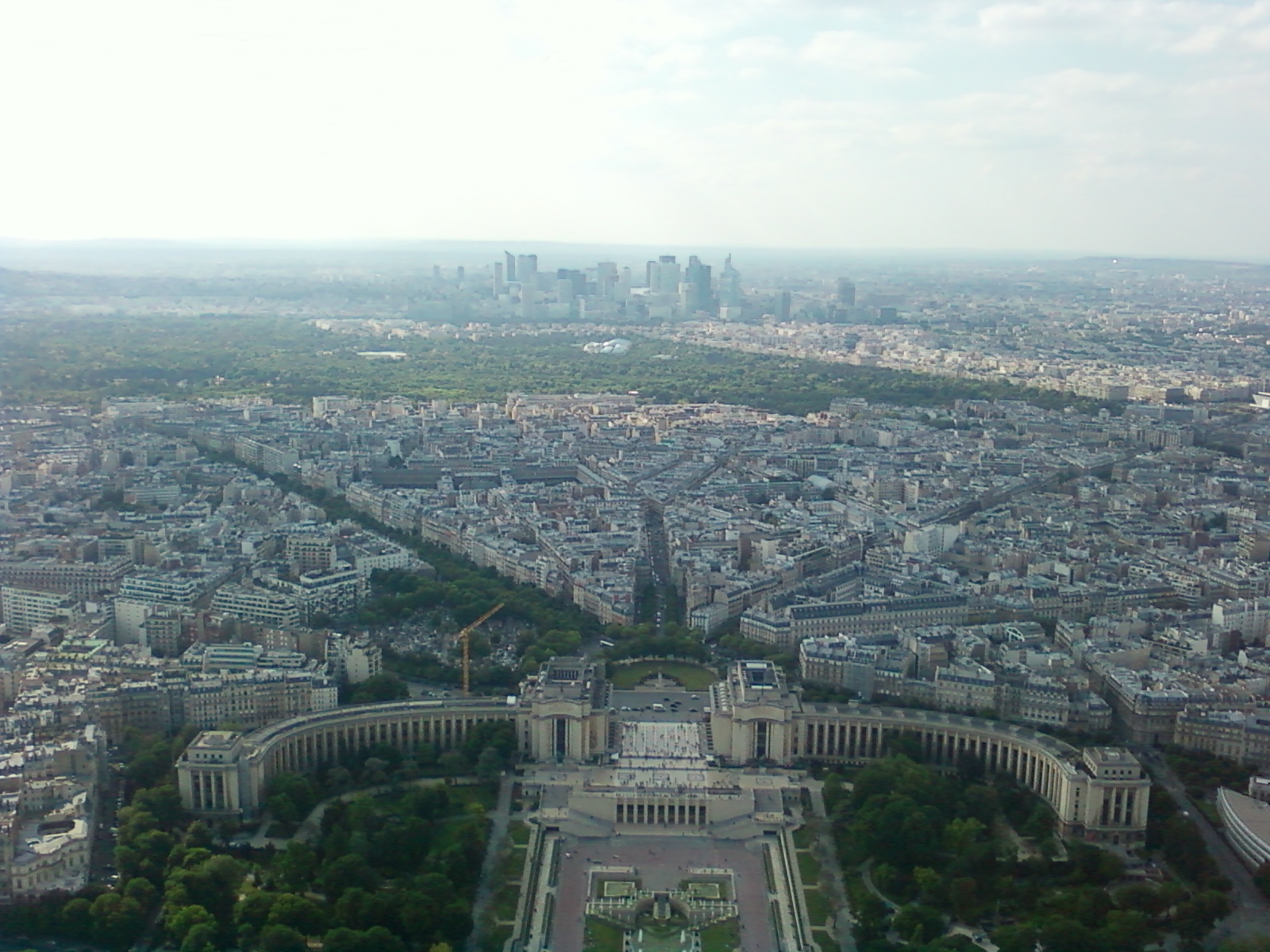
Sky view from the top of the Eiffel Tower
In total, the experience of studying abroad has really changed my thoughts on several issues here in the U.S., and though it is a bit hard to explain the feelings one might gain through studying abroad, I insist everyone take the leap of experiencing another culture at least once in their lives. The world, as it turns out, is much bigger and brighter than one could ever imagine, and the past memories that mold our world can turn every thought around the minute you learn how oddly similar yet different we are.

Making globes during World War II – Caen Memorial Museum
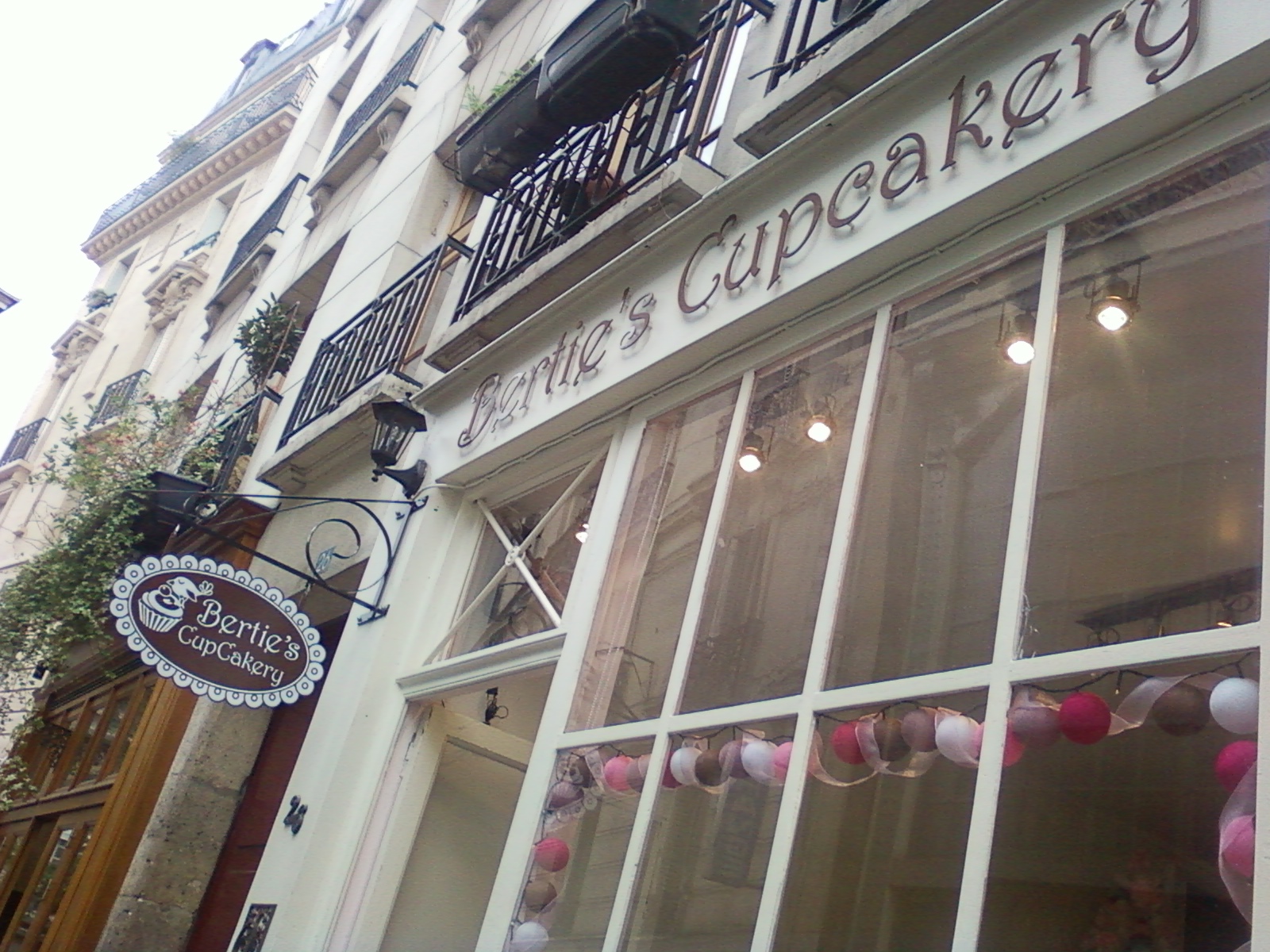
Bertie’s CupCakery – Only a few blocks from Notre Dame
Later that same day, I wandered by the Eiffel Tower and, deciding to fulfill a childhood dream, rode the carousal next to the tower. Spinning in the tea cup going the opposite direction of the carousal is very fun, but I nearly fell off the steps from dizziness while disembarking and made quite a few French children laugh.
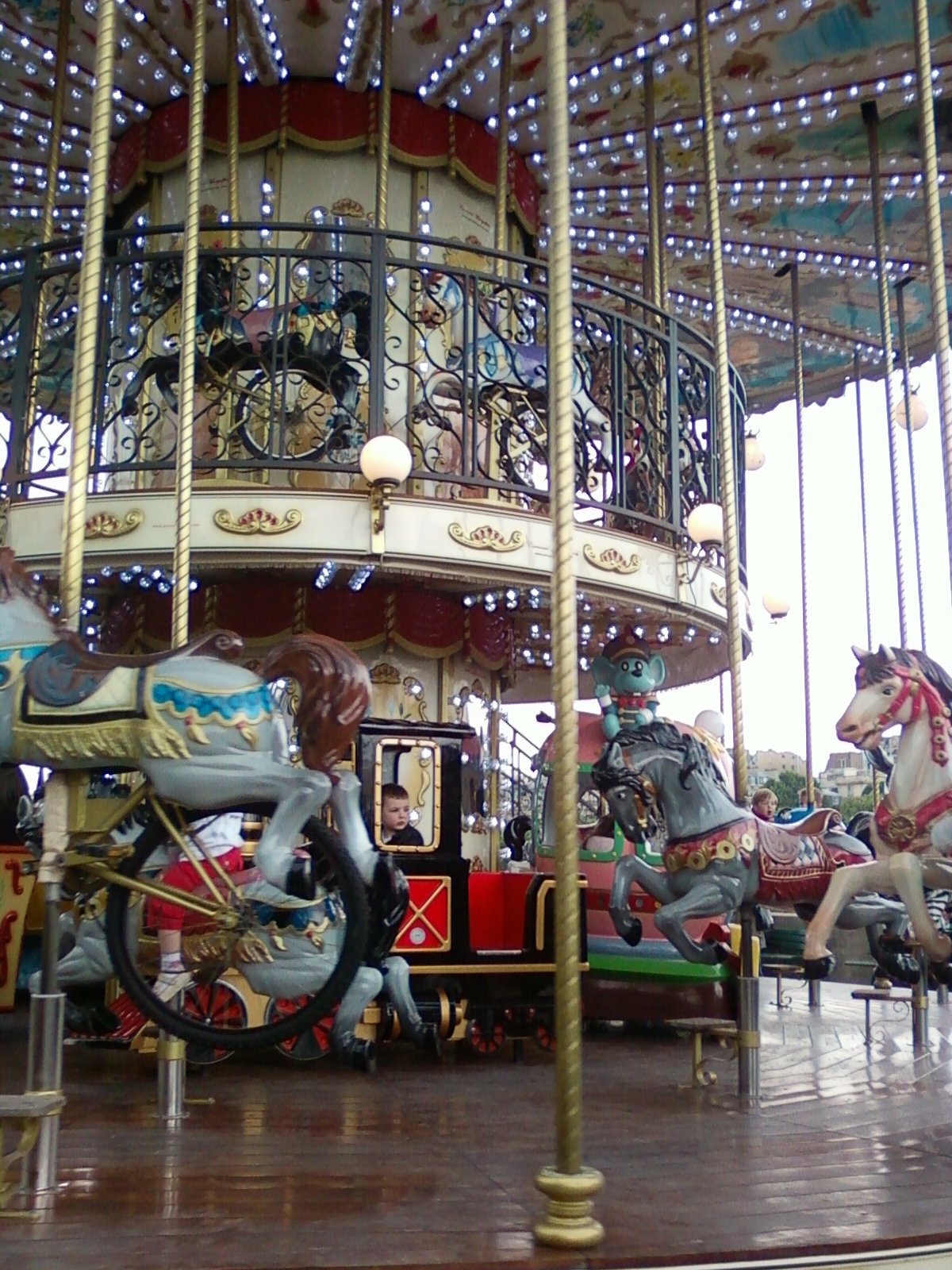
The carousel next to the Eiffel Tower is two stories with a curved staircase. Some of the horses also have bike pedals attached for no reason other than to pedal while riding.
Now moving on to the Eiffel Tower itself, I just went to the top today! I’m terribly afraid of heights, but being at the top of the tower was so amazing that I felt no fear.
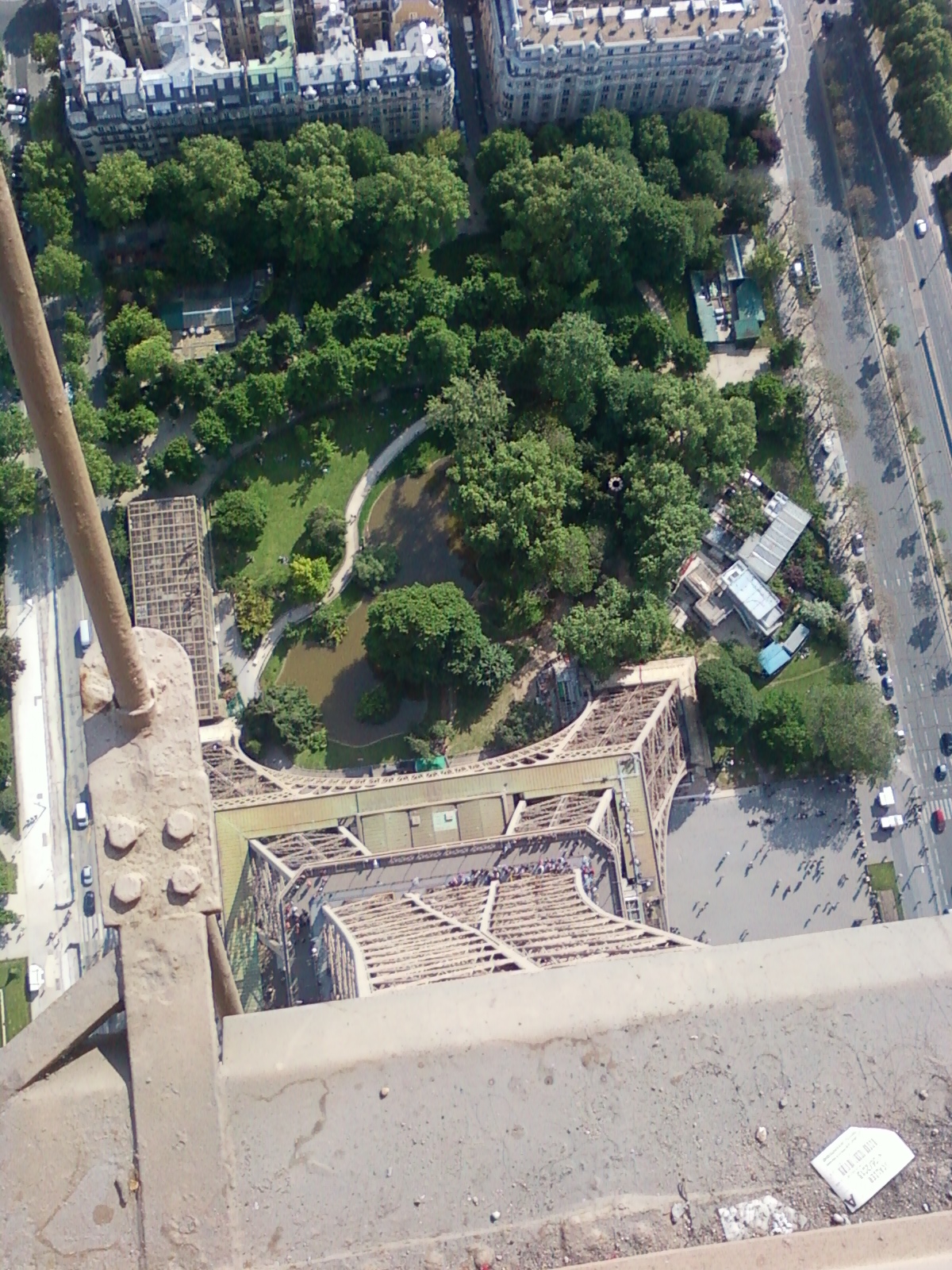
Looking straight down from the top of the Eiffel Tower.
Seeing the cloud shadows float by over the city, shading various sections, seeing from the sky different monuments the Missouri S&T students had visited, the living traffic below becoming an integrated hum – everything came together. It’s hard to describe, but the feeling of seeing the world from above just filled me with such a peaceful energy. After I left the Eiffel Tower though, I witnessed the police, clubs in hand, chasing illegal street vendors down the Trocadéro steps – that was both hilarious and sad.

A panoramic view from the top of the Eiffel Tower.
Last experience of staying in Paris these past eleven days: the nights. I’m not one to party or go out late at night, never found a joy in that, but observing the night life from the apartment windows is both funny and horrifying. It gets excessively hot in the third-floor room I share with my roommates, so we leave a window open, but by doing so you can hear everything. It seems recently a group of French guys have taken a liking to gathering in the alley below, but they like to play thumping music, drink, and play soccer. One early morning, a film crew was in the alley and they were actually filming a scene for a French movie. In total, you can never really know what you’ll find in Paris until you explore!
]]>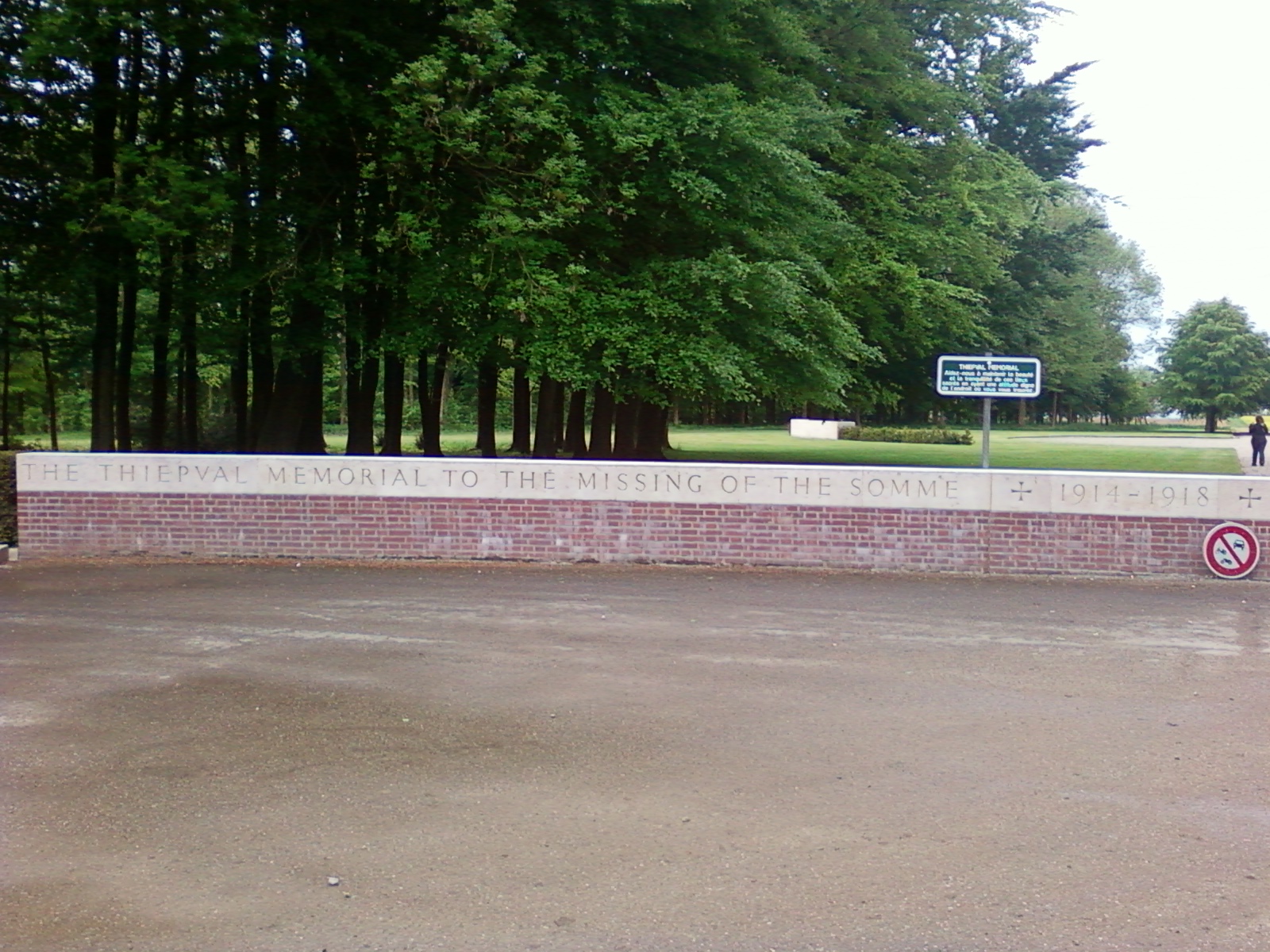 On Tuesday, May 28th, the Missouri S&T students and faculty visited various places that went over the entire Battle of the Somme, many of which included graveyards and memorials. One such memorial that was visited mid-morning was Thiepval, precisely, The Thiepval Memorial to the Missing of the Somme. Though we were only given a half-hour at the memorial, the impact of the site was still very heavy on us, as standing under the arches of the brick memorial and seeing every name of the nearly 72,000 missing men brought about feelings of intense loss. At the memorial, we visited the visitors’ center first and had an introduction to the Somme battles by our tour guide. We saw pictures of the men and in the eyes of the soldiers one could see the horrors they experienced in war. Looking around the small visitors’ center could never prepare a person for the monument itself, even with the small model on display in the lobby.
 After a few minutes, everyone took the small hike up hill to the monument, which took a trail from behind the visitors’ center, past a couple of cottages, and through waist-high stone walls giving a small inscription of what is present on site. The huge gravel circle in front of the monument led up to a wide grass field one had to walk across to reach the structure, as no paths were built. The Thiepval Memorial itself was imposing on the scenery and can be seen from far-off distances in the countryside, but standing before the structure’s steps themselves brings the gravity of the situation down on a visitor, especially once one comes close enough to read the names scrawled across every part of the one-hundred-and-fifty-foot-tall monument. The laurel wreaths on the building also add to the monument by giving the names of the battles occurring in the Somme, as well as the many dedications to the soldiers on the upper walls of the structure.
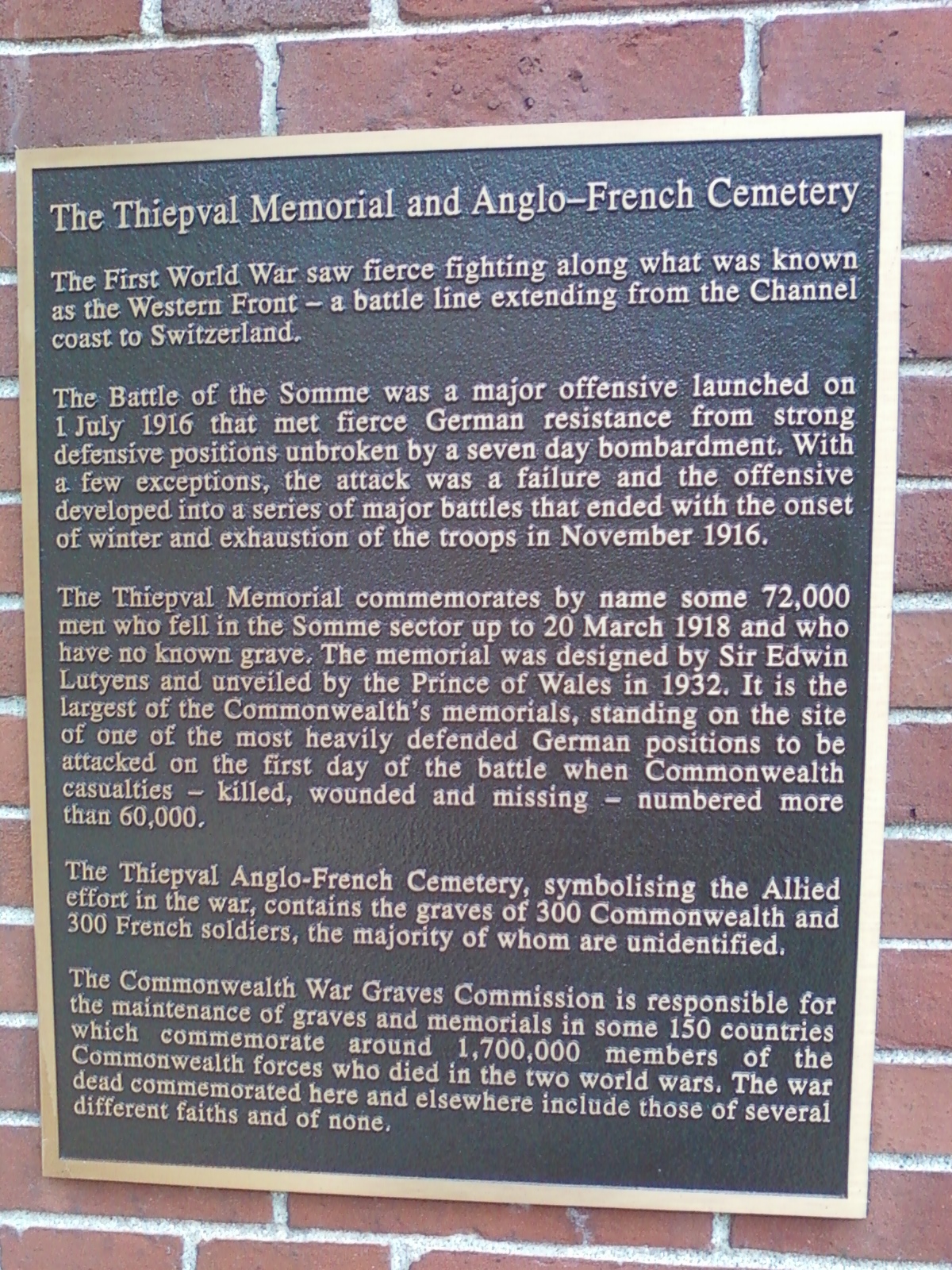 As a representation of The Battles of the Somme, the Thiepval Memorial truly does give an accurate impression, as by representing every man that went missing in the battles it gives some people the sense of the war not being over yet. It does honor the memory of the missing, but the war can never really be over and give everyone closure until all of the names on the walls of Thiepval are accounted for – even in modern times, the war is still ongoing in the hearts and minds of the people who knew the deceased. To have such an overwhelming structure that stands over the rest of the land, the Thiepval Memorial could also act as a representation of the men who stood to protect the country and still remain on this land as guardians, with their duty ending once the body is found and given a proper burial. As the stone in the middle of the memorial says, “Their name liveth for evermore.” These soldiers will continue to exist in memory until the day when they are found and put to rest, and their battles, finally, put to an end.
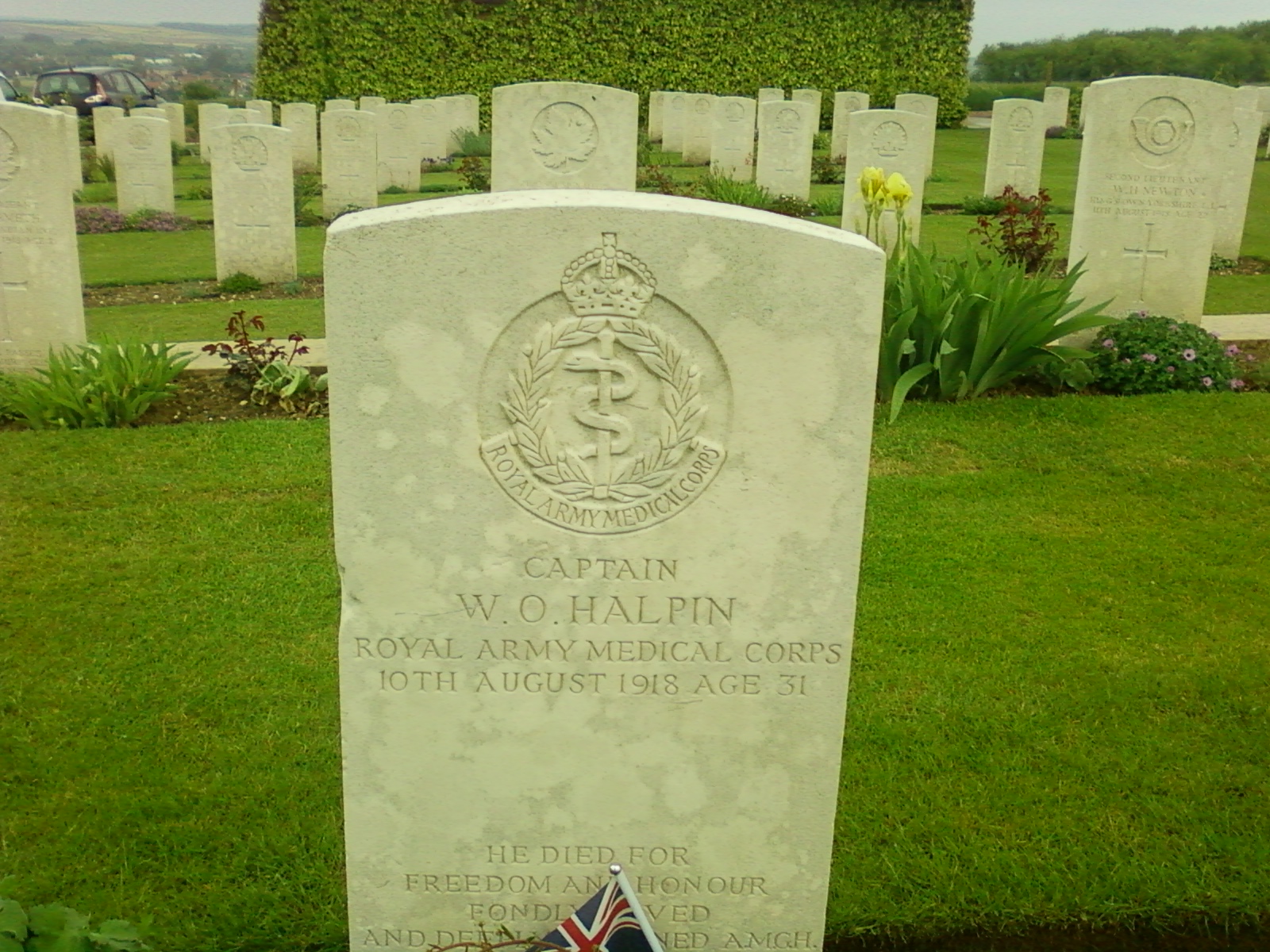
British soldier’s grave stone at Villers – Bretonnuex
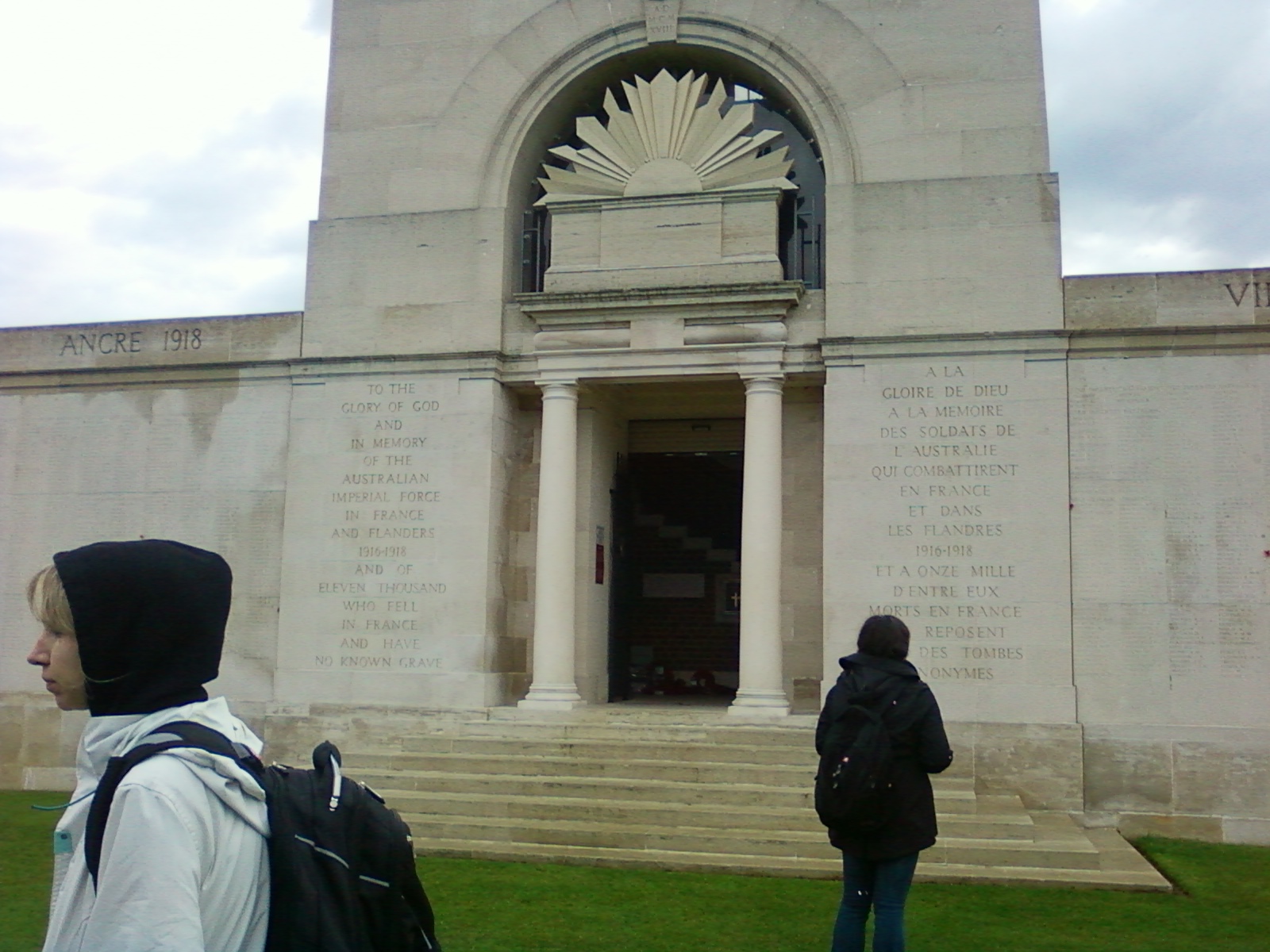
The main memorial building of Villers – Bretonnuex
Our biggest stop of the day, after visiting various graveyards, had to be the trenches – we actually got to walk through the trenches along the soldiers path! It was very heart-wrenching thinking about how many men lost their lives in the very places we stood, but all the while an honorable memory.
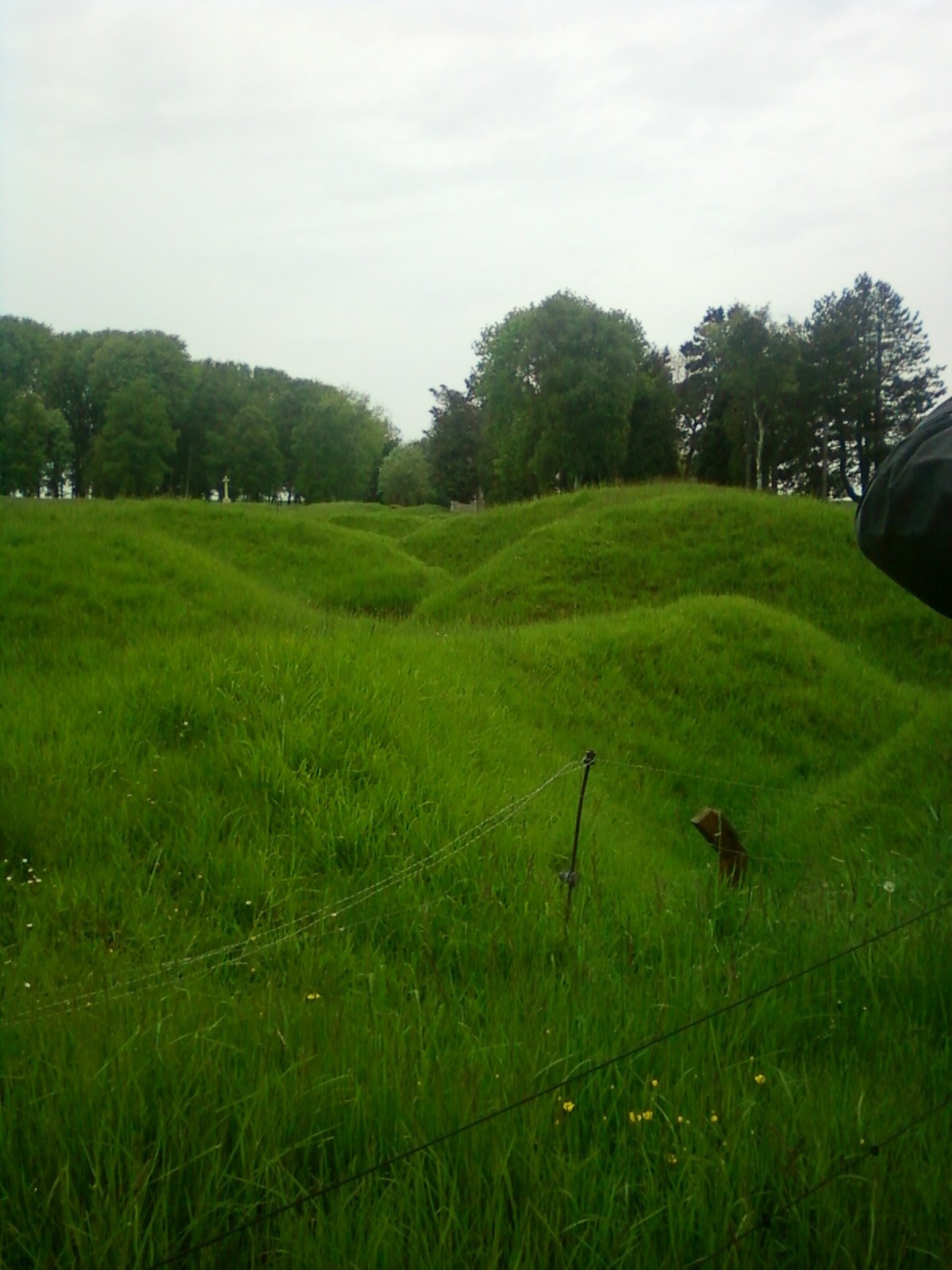
The zig-zagging path of trenches at the Newfoundland memorial
Our last stop was the Historial de la Grande Guerre, where we got to see the uniforms of soldiers laid out in pits of the floor with all of their gear, propaganda posters covering the walls, and artifacts from The Great War. Seeing items that the men once used really strikes a chord in a person, it makes it hard to believe that the war occurred only ninety-nine years ago.
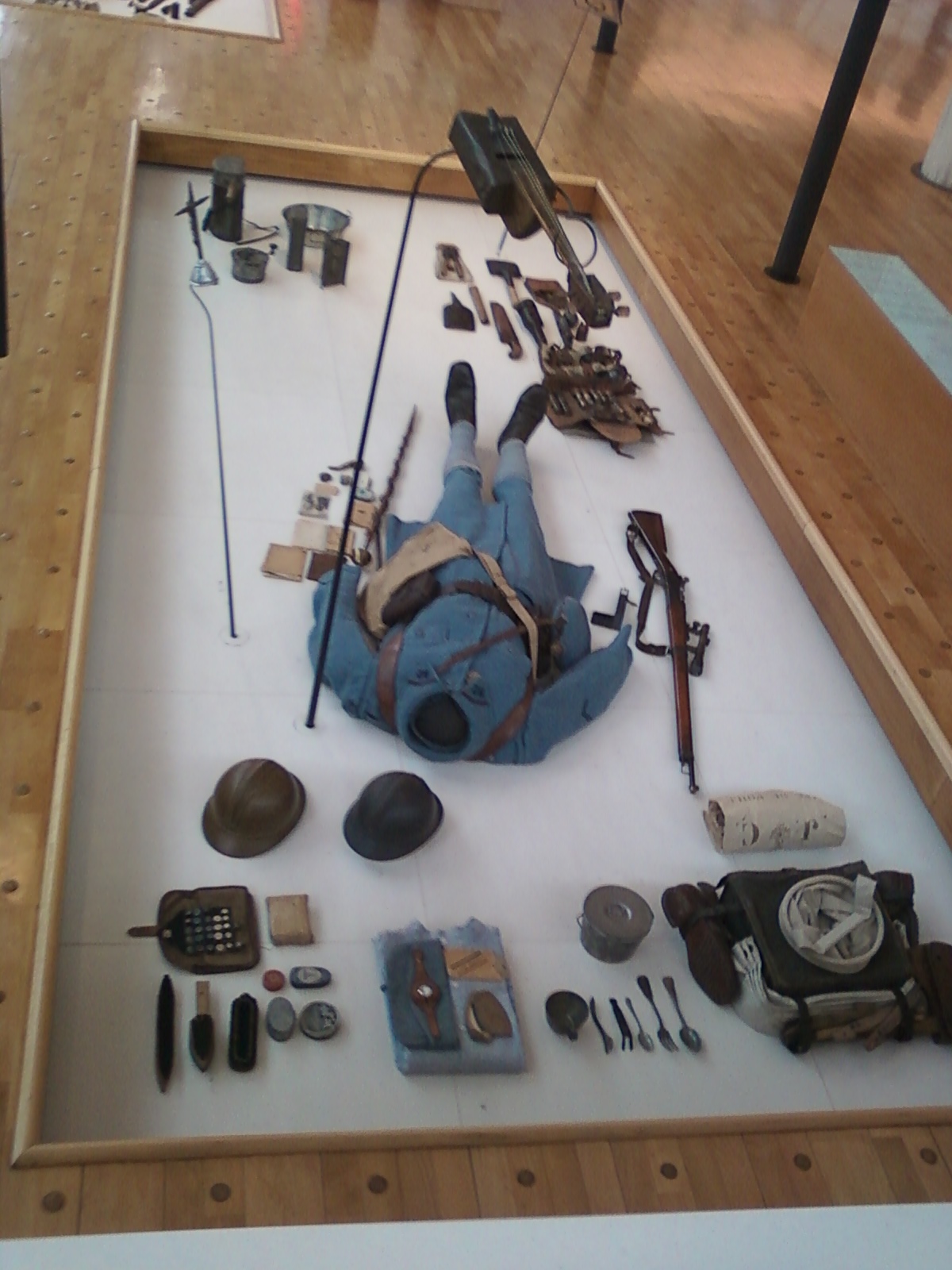
Uniform of a French Soldier – Historial de la Grande Guerre
It makes you really think and feel the pasts setting, the feelings the people had to be experiencing in their time, and how those feelings echo into the present when we look back on our shared history. Everything we saw today brought to light the true meanings of memory and how those memories intertwine with history.
~Stephenie Lynch
]]>