I was able to see the tourist attractions that children point out in books, like the Eiffel Tower and the Mona Lisa, and I was able to experience rare monuments dedicated to the tragedies and sacrifices of WWI and WWII.
It is hard to believe that I stood on the same beaches that thousands of soldiers marched on to liberate France while we enjoyed a tour of the area and ate at a local restaurant as if nothing happened. The eerie peacefulness of the area and the horrific photographs that you know were taken at the same spot where young children now swim and build sand castles is eye-opening.
At the same time, you realize how small you are during such an experience. It is amazing that in an 8-hour plane ride you can travel half a globe and experience a completely different culture.
My favorite place that I visited was the Louvre, and the second was the Pantheon, where I saw the final resting place of Rousseau and Voltaire. They wrote some of my favorite books, and I didn’t even realize I would see them! As for the Louvre, the amount of tourists was overwhelming. At the Mona Lisa, there was at least 100 people crowded in front of the work trying to get as close as possible. I was able to fight through the crowd, and I saw the masterpiece for the second time of my life. It was worth the crowd.
 You would never believe how much I had to fight to get this picture!!
Overall, the experience was amazing. I am extremely glad that I had the opportunity to learn about WWI, WWII, and French culture at the very heart of Paris and Caen! The most important thing I learned, besides that my knowledge on WWI and WWII was very rusty, would be that the City of Light is nothing like you read in the picture books. The city is even more beautiful than any picture you can buy, the people are not as arrogant as we think they are (but they are a little bit at times) and the monuments they create are timeless, peaceful, beautiful, and breathtaking.
My opinions of French culture never really changed, but I learned that they are very nice. I only had two people be rude to me, and I was lectured once on how could I visit Paris without learning French! I did get the occasional “sniff” when I asked if they spoke English, but after seeing how many tourists they get, I can understand their frustrations.
I miss Paris, but by the time I left I was sick of French food (shhhh, don’t let them know). I hope our blog gave you an idea of what it was like, and hopefully it will encourage others to visit!
]]>
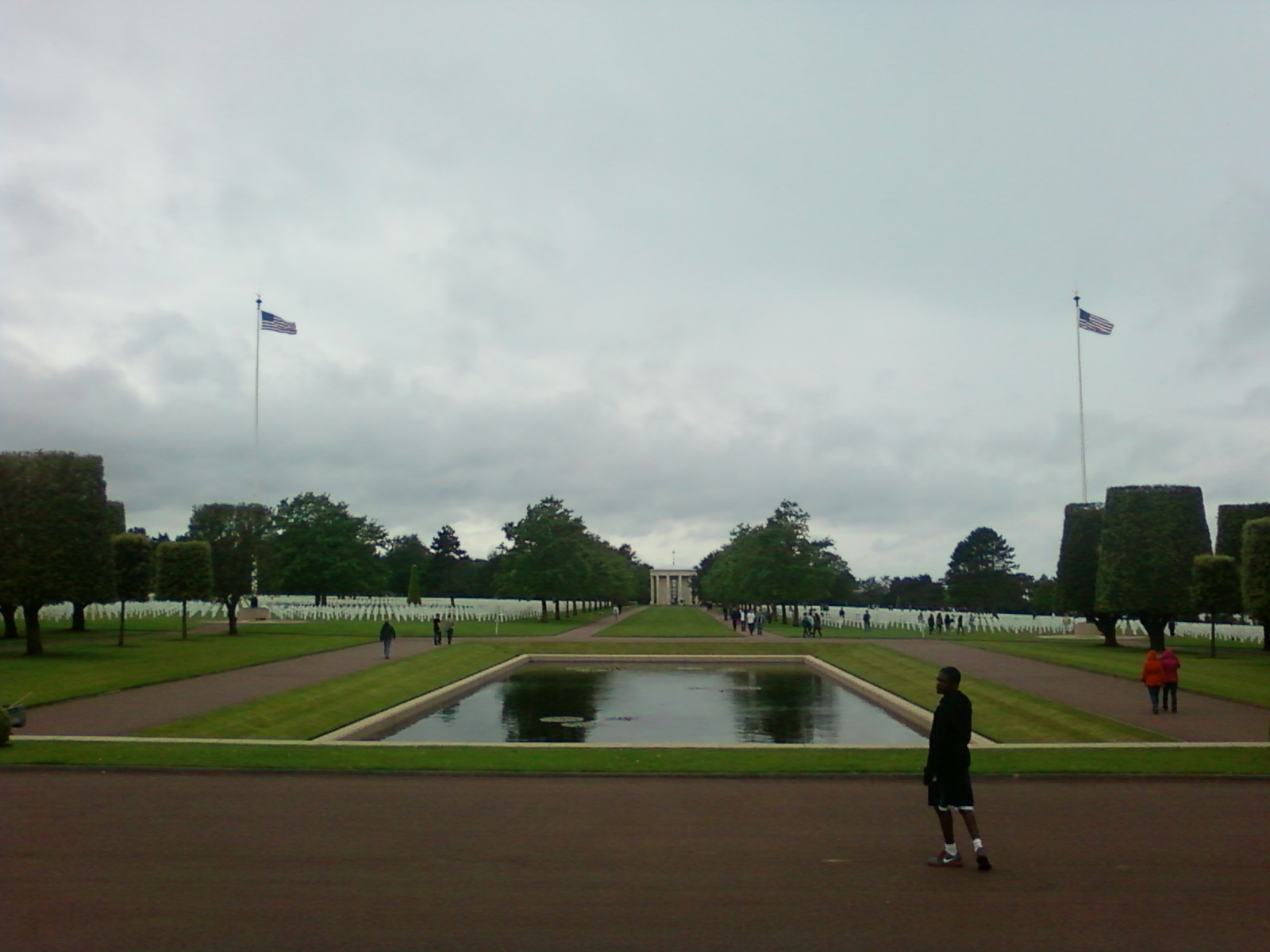
The American Cemetery
Taking a class at the university could never prepare someone for the things they might experience and feel when standing at the historical monuments in person. Yes, America has quite a few historical monuments that bring about similar feelings, but for France, World Wars I and II took place on their soil while we were an ocean away. Today’s American citizens could never compare such experiences of having their home country invaded and occupied, but for France the past still remains in the everyday of the citizens’ lives. Social order was heavily changed once France was occupied during World War II, with the weight of events still dictating how people act in social situations today by trying to have the utmost respect for another person despite differences so as not to repeat the mistakes made by others in the past.
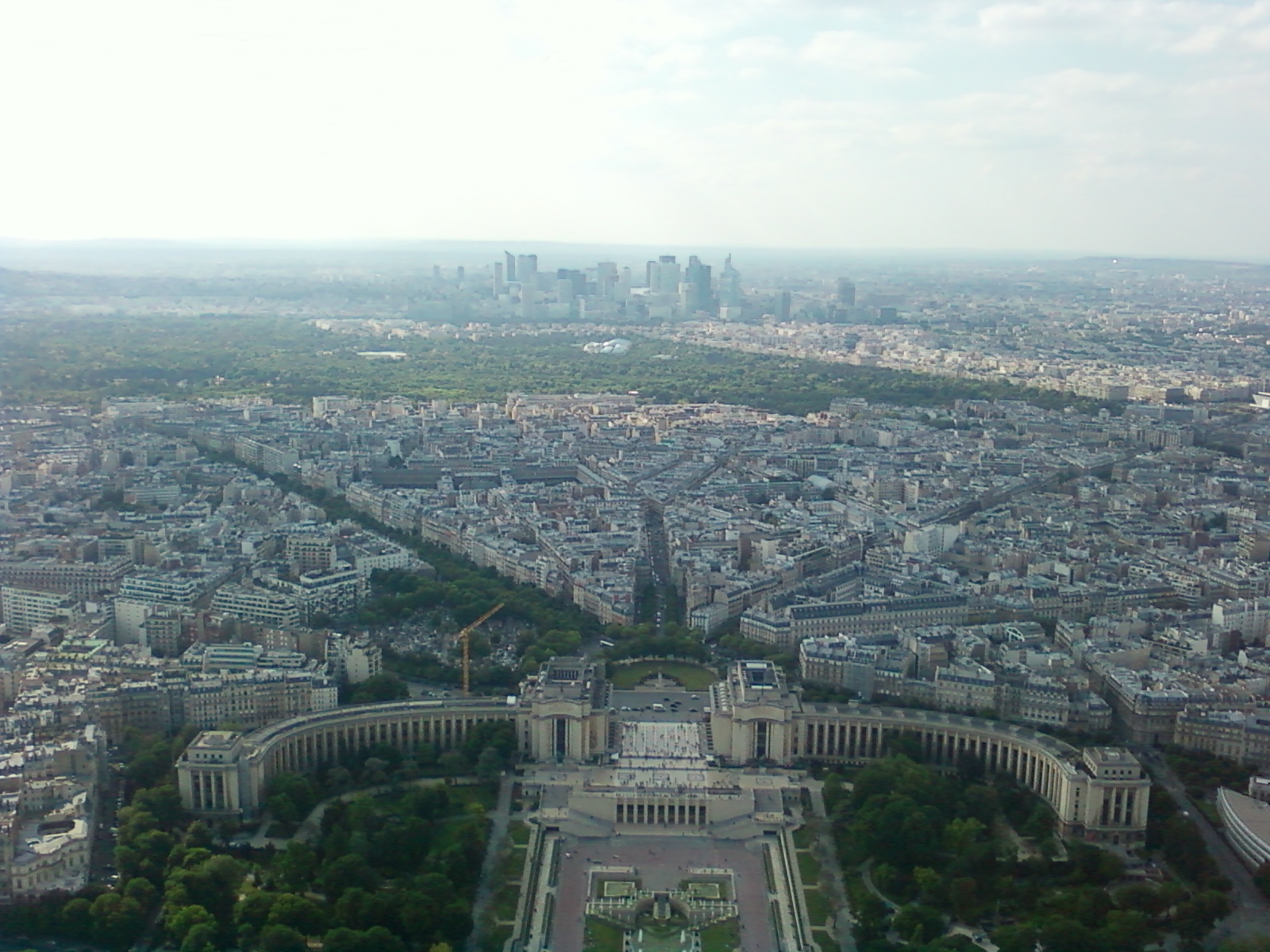
Sky view from the top of the Eiffel Tower
In total, the experience of studying abroad has really changed my thoughts on several issues here in the U.S., and though it is a bit hard to explain the feelings one might gain through studying abroad, I insist everyone take the leap of experiencing another culture at least once in their lives. The world, as it turns out, is much bigger and brighter than one could ever imagine, and the past memories that mold our world can turn every thought around the minute you learn how oddly similar yet different we are.
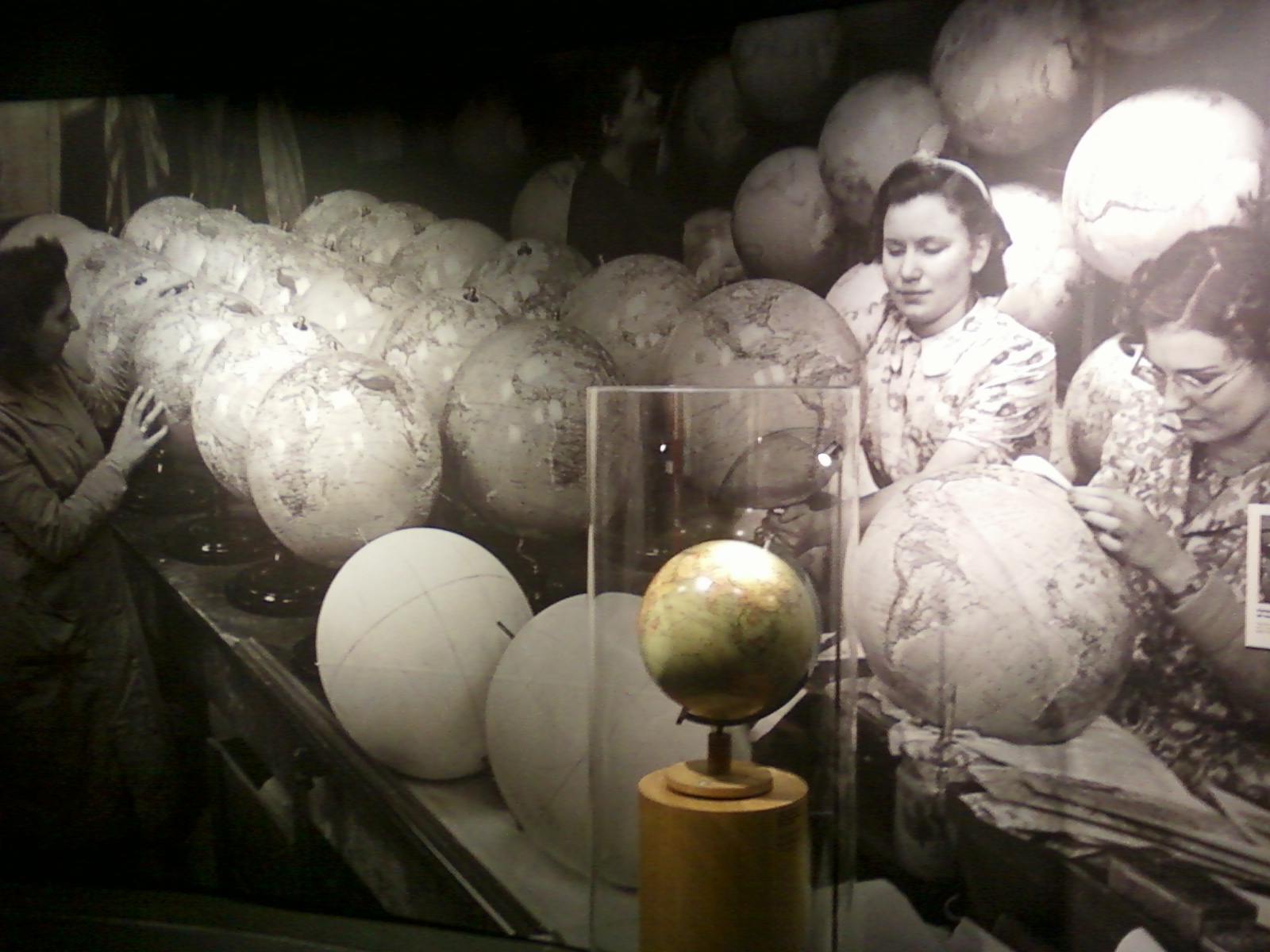
Making globes during World War II – Caen Memorial Museum
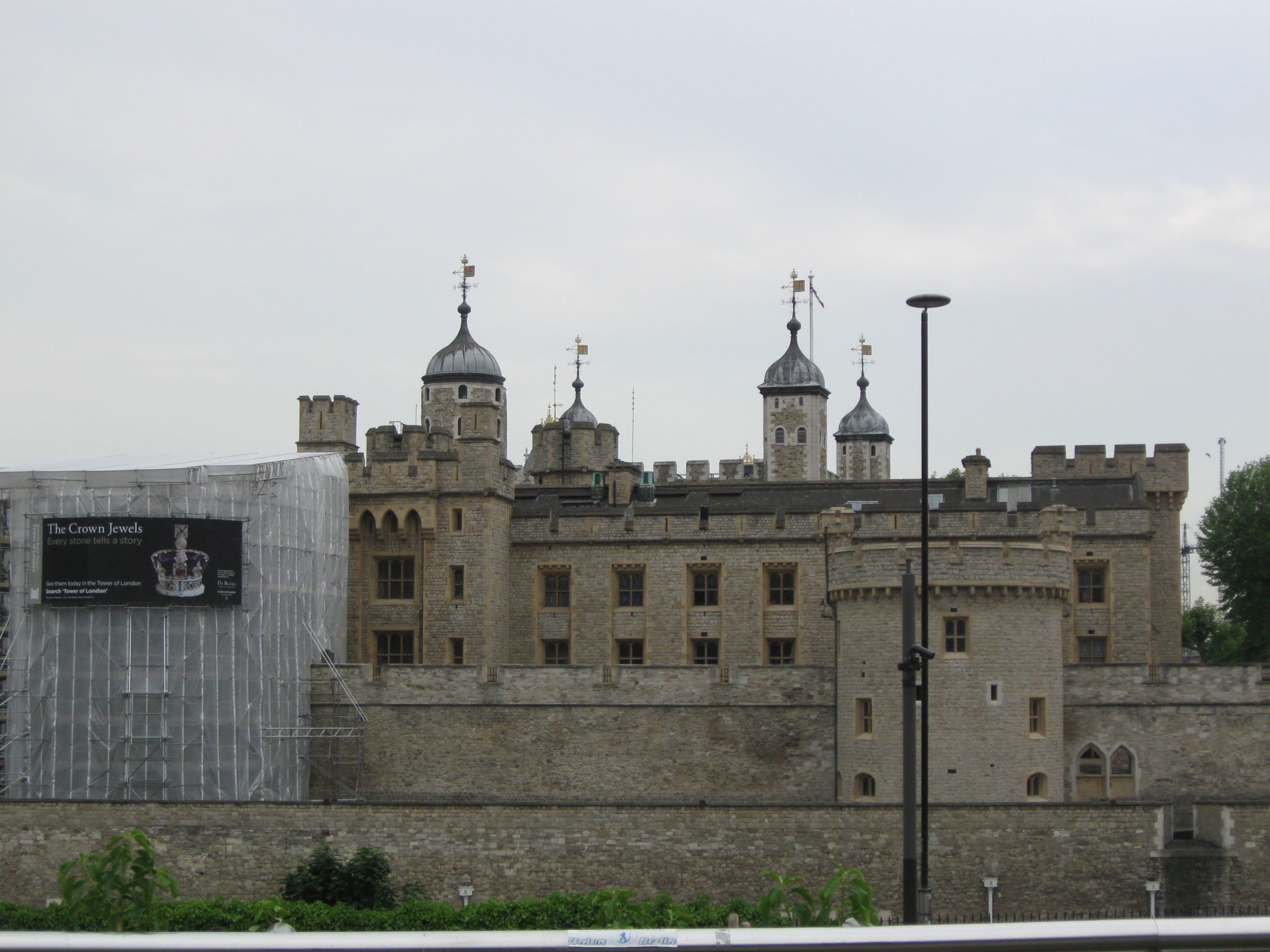
Tower of London, originally built by William the Conqueror.
London in a day was a great experience. I got into London around 8:30am and started the day in King’s Cross Station, a necessary pilgrimage site for any Harry Potter fan. I then went to Westminster and got a great view of the London Eye, Big Ben, the Houses of Parliament and Westminster Abbey. Next I went to the National Gallery and saw a few works by Vincent Van Gogh.The museum was free but if you wanted a map you were required to make a one pound donation. At the British Museum, my next stop, the map cost two pounds. I saw the early and Roman Britain exhibits there.

Big Ben in Westminster
From there I got a chicken and vegetable pasty (a chicken and vegetable filled savory pastry) for lunch on Oxford Street. After lunch I went to the South Bank to see Southwark Cathedral, which has a memorial to Shakespeare and is not far from his Globe Theater which has been rebuilt not far from the original location on the South Bank. I then went to see the Tower of London and the Tower Bridge and took a ton of pictures. On the way home I decided to stop for English tea and a scone with golden raisins, which was delicious. The weirdest part of being in London was keeping to the left. Throughout the Underground (London subway) tunnels there were signs reminding people to keep left, which is the opposite side of the hallway from what I’m used to walking on.
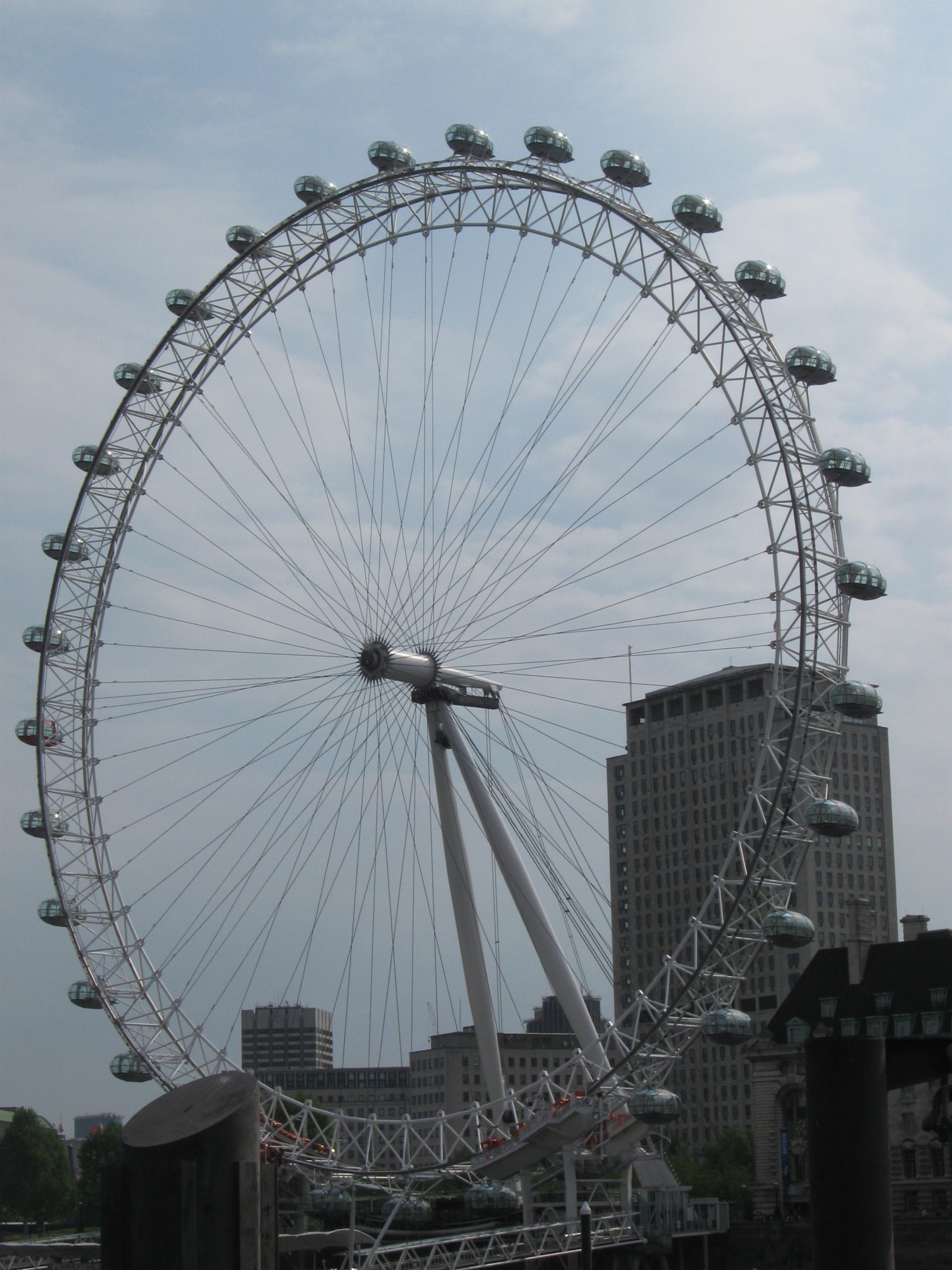
London Eye in Westminster.
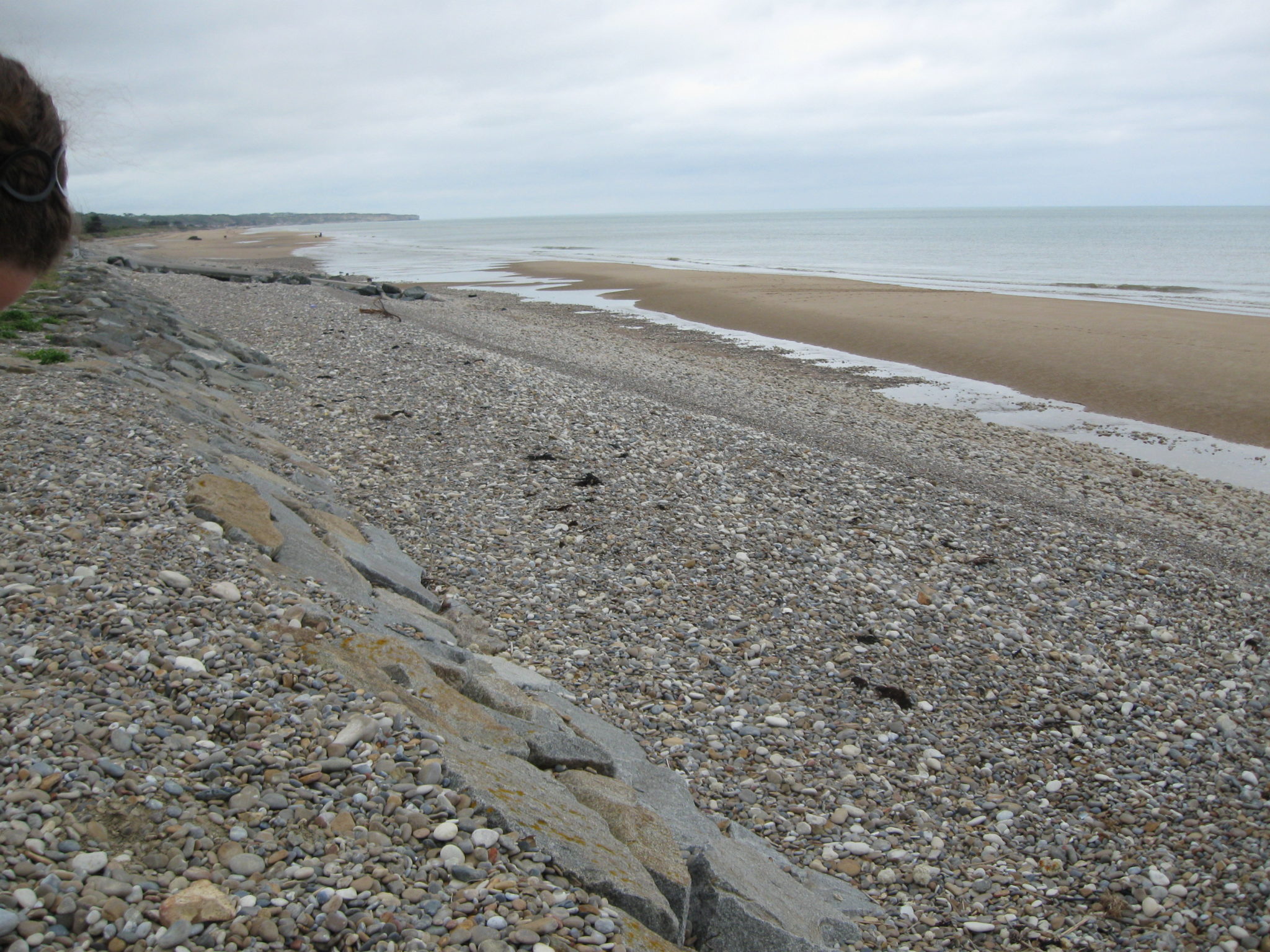
Omaha Beach, one of the American D-Day landing beaches
Caen is a town in lower Normandy that was liberated by the British during the invasion of Normandy in the summer of 1944. It is also the home of the chateau of William the Conqueror. I took a ton of photos from the wall of the beautiful view of the city. While staying in Caen we visited the D-Day Beaches and the American Cemetery. It’s hard to picture all of the German defenses and the soldiers on the beaches because of how beautiful and peaceful the beaches are now. The American Cemetery was situated on a beautiful and peaceful location overlooking a section of the beach. While we were exploring the cemetery the sun finally came out and it got warm and it was so beautiful. I have enjoyed my trips to France and London and I look forward to coming back again.
]]>
The entrance to the Bayeux Tapestry Museum. No photos were allowed inside.
The Bayeux Tapestry tells the story of the Battle of Hastings between self-proclaimed King Harold and the Duke of Normandy, William, (later known as William the Conqueror) as well as the events leading up to the battle. The tapestry starts out with King Edward (also known as Edward the Confessor), who is childless, sending out Harold to fetch William and tell him that he is the heir to the throne. Harold obeys his king and sets out across the English Channel but is soon shipwrecked in a land that is not Normandy, his destination. Harold and his fleet are taken captive by the local ruler and negotiations for Harold’s ransom begin. William is informed of Harold’s misadventures and demands his release. William takes Harold to his palace in Normandy where is well received and is even invited by William to join him in battle against the Duke of Brittany. During this battle Harold saves two of William’s Norman men and is knighted for his courage. William then requires Harold to swear an oath of allegiance to him as the future king of England and Harold obeys. After this Harold returns to England to a dying King Edward.
After King Edward’s death Harold breaks his oath to William and declares himself the king of England. Initially the people rejoice but after the sighting of Haley’s comet they begin to worry that sea invasion is approaching. William receives the news that Harold has appointed himself king against the wishes of King Edward, so after conferring with his half-brother William decides to build a fleet to cross the Channel and invade England. He orders master shipbuilders and craftsmen to build a fleet of ships. Once the fleet is prepared the men leave Normandy with light hearts for England. They land in Pevensey, disembark and quickly build a fortified town. In scene 47 of the tapestry a house is being burned down by a Norman soldier as a woman and child flee. The woman and child represent the refugees that fled the pillaging, invading Normans.
The Battle of Hastings finally begins on October 14, 1066. It is vividly portrayed through the use of color and borders. During the early scenes of the battle Norman archers can be seen. Along the bottom border during the battle the dead can be seen, as more and more men lose their lives before the end of the battle. The Battle of Hastings ends with the death of King Harold, likely from an arrow.
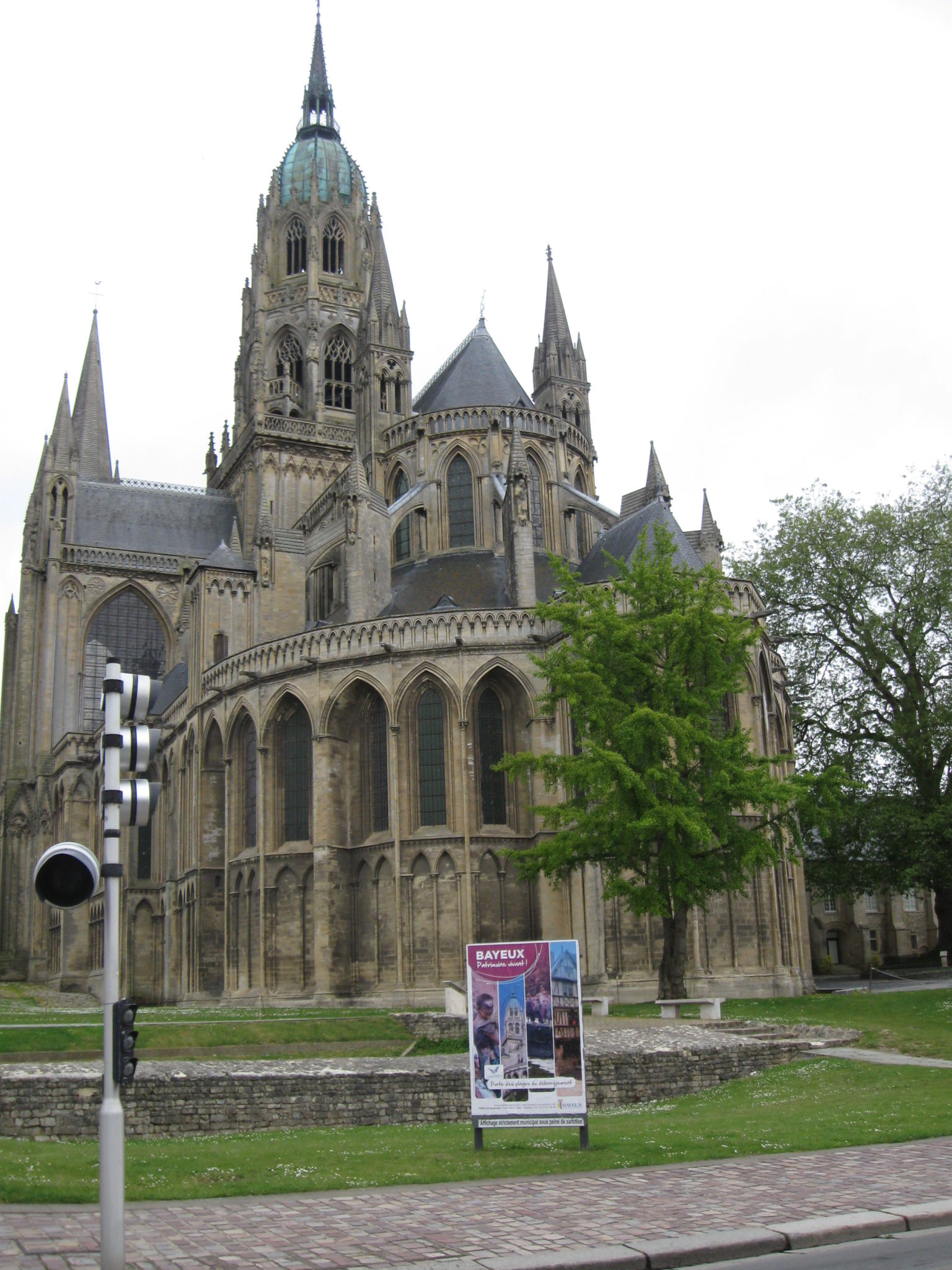
Bayeux Cathedral where the tapestry was originally hung
The Bayeux Tapestry was commissioned after the war as a piece of Pro-Norman propaganda. The tapestry tells the story of the defeat of the Anglo king, Harold, and the victory of the Duke of Normandy, William, through pictures, so it can reach a broad audience including the common people, many of whom at the time of the battle could not read. It was hung in the nave of the Bayeux Cathedral until the French Revolution when Emperor Napoleon moved it to the Musée Napoleon (later called the Louvre) in Paris. It was later brought back to Bayeux where it remained until World War II. During World War II the Nazis took the tapestry and it was briefly lost after the war and assumed to be in German hands, but it was soon found intact in the basement of the Louvre.
The Bayeux Tapestry isn’t actually a tapestry, but actually a long work of embroidery. Colored wool thread was embroidered onto a linen cloth using four different stitches: the stem stitch, chain stitch, split stitch and Bayeux stitch.
]]>