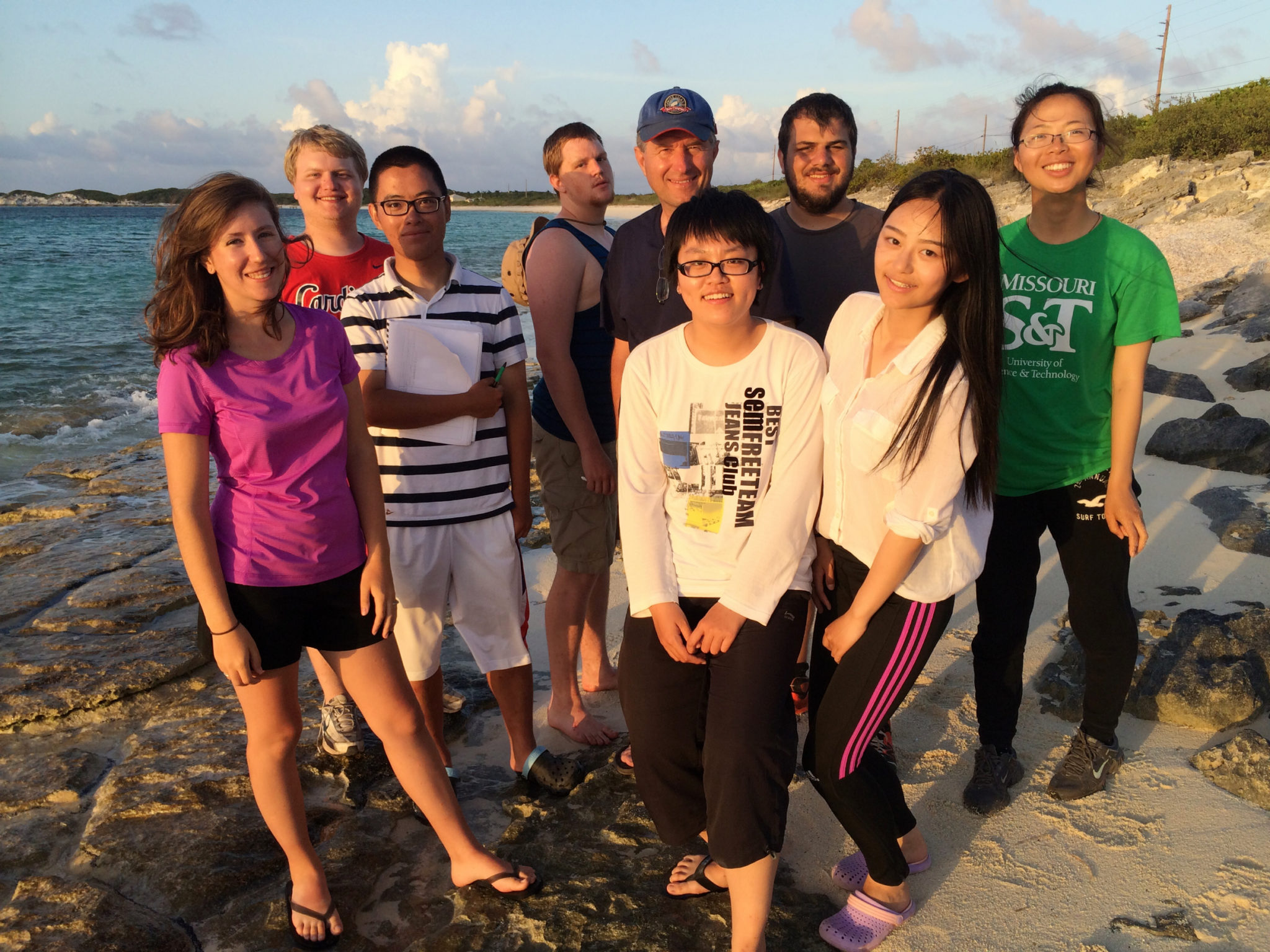
We have done a lot while on the island, from the inland lake studies to the coral reefs, but one of the aspects of this class that was the most striking was the lack of water. Freshwater has disappeared from San Salvador Island due to overuse of the resource. The arrival of Club Med in 1994, along with the rise in population in Cockburn Town led to over-pumping, with pump rates increased by 400%. One way we see this is with the blue hole on the island lacking the freshwater lens it historically possessed. These types of studies using blue holes as well as sea level proxies can tell us about the past environment and help to predict the future. A couple of students, including myself, looked at the biology and paleontology of the island to see how the geology may have affected the biology. A lot of people just think of mining and oil when they think geology, but this trip really shows that geology is incredibly useful in environmental studies, too!
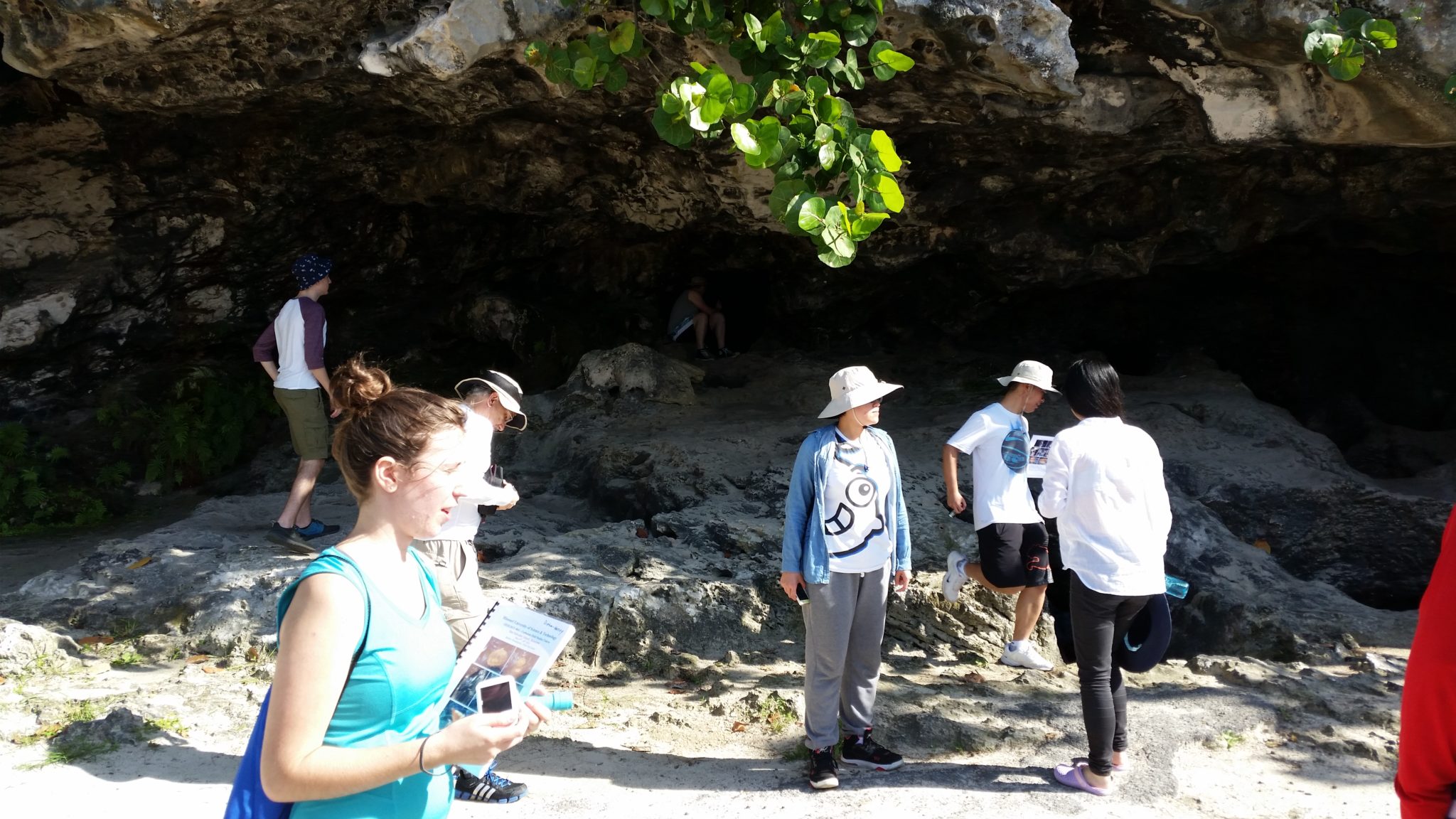
It has been an incredible trip, and I would urge anyone who has taken a single geology class to look out for Geology 4841 this upcoming spring, as Dr. Wronk always teaches an amazing class, and travel, wherever it may be, is always an opportunity that should be taken advantage of!
]]>(5/24/2015) Another fantastic experience was night snorkeling. Some ‘night-birds’ only like hanging out at night, such as lobsters and sea turtles. However, their leisurely night life was disturbed by our flashlights. A damselfish was just 10 cm in front of my face, when the light hit him, he turned around and looked at me, like, ‘ What’s going on here? Who is this guy? ‘ Although turtles seem to be loggy on land, you can never touch them under the water. Every time you got close to them, they slipped away like birds.
As geologists, we always say, “Present is the key to the past.” The Bahamas is a kind of place you can see both present and past. Comparison and correlation between ancient rocks and modern deposits helped us to understand the processes of sedimentation and also environmental change during geological time. I would say this field trip truly expanded our horizon.
-Yizuo Shi
]]>The water was incredibly murky, but the highlight of the dive was going down toward the bottom toward a boundary of cold water. I reached the refreshing, cool and clear water. At 10 feet down I could see a cave entrance that connects the Blue Hole to the ocean. After a few leaks with my sampling bottles I got some readings to study later.
After collecting samples for my research, we saw a little stingray and a huge parrot fish. It was a chance to relax and pretend to be a biologist.
]]>
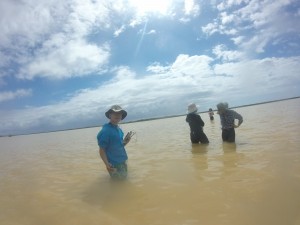
In the afternoon we went out to Pigeon Creek, where we ate lunch, and in the spirit of Caddyshack, we became the sediment. We let the current take us the same way it would transport sediment, and in this way we are given a chance to see just how the sand bars and beaches in the area form. While being the sediment, we also snorkeled and saw incredible things, ranging from the small anemones and algae, to the much larger stingrays and barracudas.
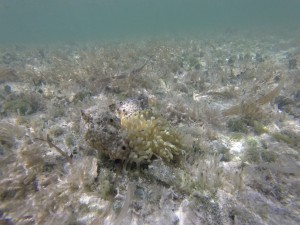
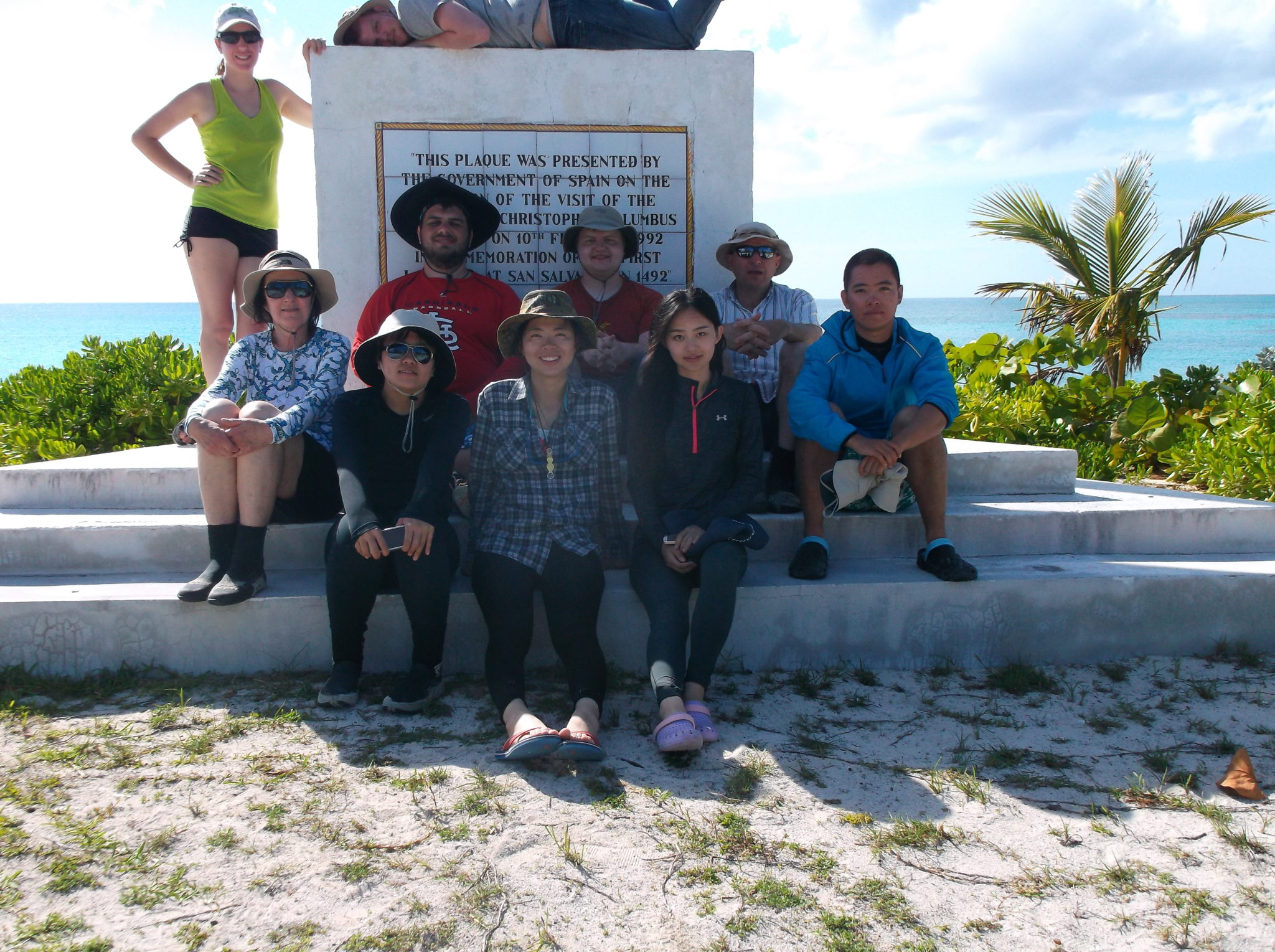
Following our two hour snorkeling session, we headed back to the Gerace Research Center, but not before playing tourist for a bit. We stopped at the Columbus monument, and the Mexico Olympic Torch monument during our day’s circumnavigation of the island.
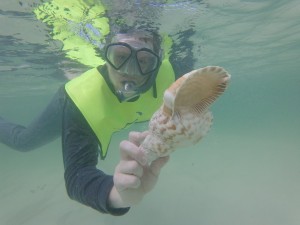
When I put my head into the water, I feel the world stop and I can just hear the sound of sea water. At first, I held Dr. [Daniel] Stutts’ arm all the way when we were snorkeling, then I became relaxed and felt more comfortable. What a beautiful scene! I saw many fish and corals. Dr. Stutts dove deep and got many sea snails for me to look at. I’ve never seen such beautiful living creatures!
What is most important for today is that we saw a sting ray and barracuda! The sting ray is an interesting guy who has a unique shape and stays close to the bottom of water, his long thin tail shakes and helps him move. The barracuda we saw is very big, about one meter, his color is similar to the sea water, which you can not easily find. I try to use my fins to move quickly to keep up with the barracuda, but he is so fast and finally disappears.
]]>Sunday May 17th:
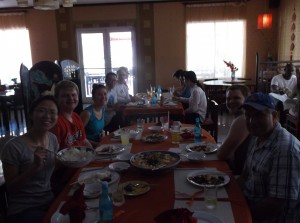
We stayed at the beautiful Orange Hill Hotel for our only night in Nassau. With the help of our Chinese students we managed to get a wonderful Chinese meal for our first stop in Nassau, followed by checking out flank-margin caves a little ways down the road. The caves are formed by the complex interaction of marine water with the water table that is under the land. After the caves, we hit the beach for some practice snorkeling and swimming before we get to San Salvador. With everyone being so helpful to each other we started to see an improvement in our skills and we’ve been told that the waters that were so difficult in Nassau, were much tougher than most of the places we’ll see on San Salvador. Following a pool session to swap the salt taste for chlorine, we got food at the Orange Hill’s restaurant and got a taste of the local cuisine.
Monday May 18th:
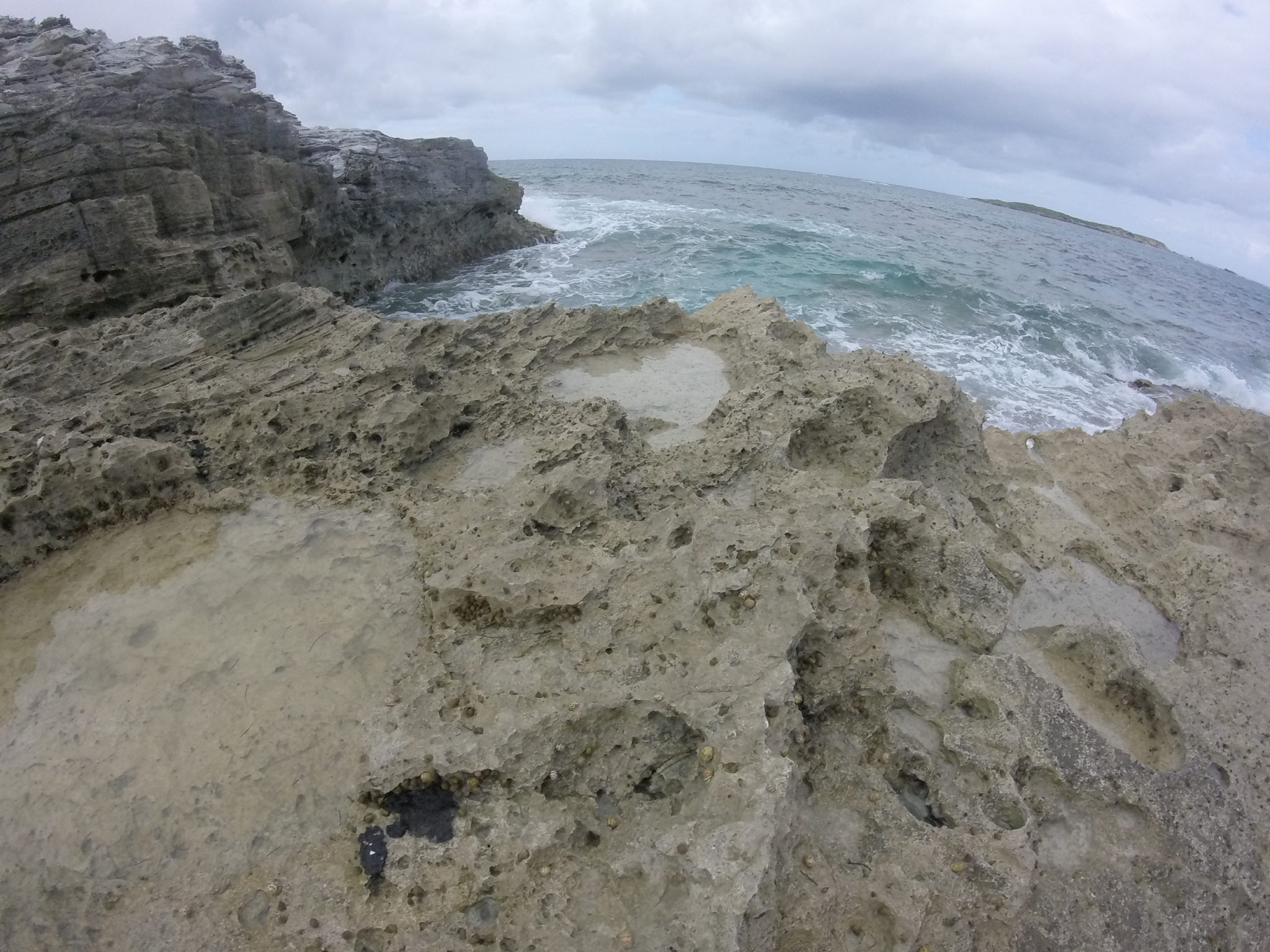
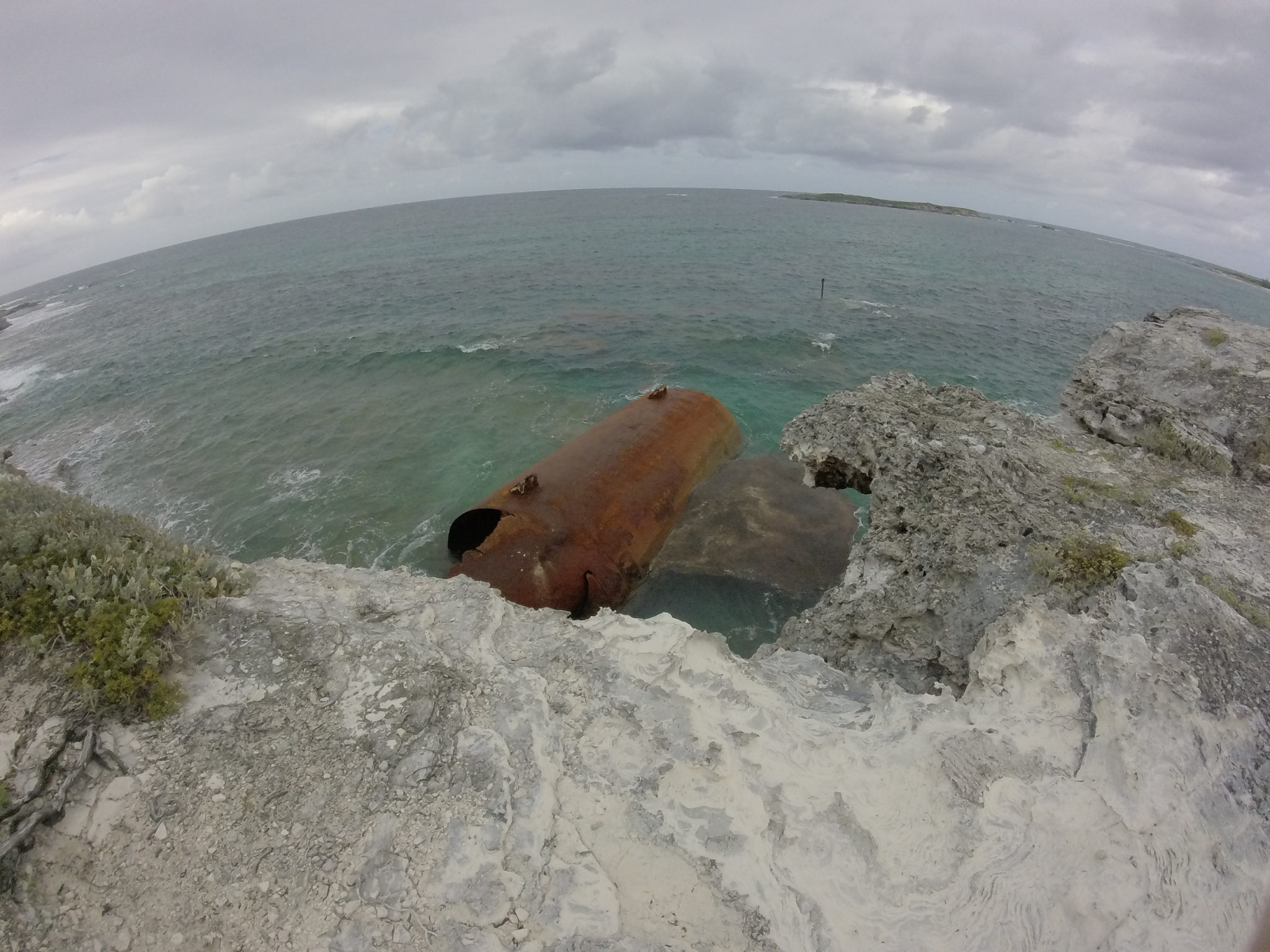
After catching our flight from Nassau to San Salvador, we finally made it to the Gerace Research Center, where we had a quick lunch, followed by base orientation. Following orientation (and some torrential showers) we hiked the beach in Graham’s Harbor, and then North Point, a little ways off from the base. North Point is made up of Eolianite dunes, which means they were wind blown sand dune beaches that eventually were cemented into rock. After a quick dip in the harbor, it was back to the base for dinner and a bit of review over what we saw today.
]]>