Normal
0
false
false
false
EN-US
JA
X-NONE
/* Style Definitions */
table.MsoNormalTable
{mso-style-name:”Table Normal”;
mso-tstyle-rowband-size:0;
mso-tstyle-colband-size:0;
mso-style-noshow:yes;
mso-style-priority:99;
mso-style-parent:””;
mso-padding-alt:0in 5.4pt 0in 5.4pt;
mso-para-margin-top:0in;
mso-para-margin-right:0in;
mso-para-margin-bottom:10.0pt;
mso-para-margin-left:0in;
line-height:115%;
mso-pagination:widow-orphan;
font-size:11.0pt;
font-family:Calibri;
mso-ascii-font-family:Calibri;
mso-ascii-theme-font:minor-latin;
mso-hansi-font-family:Calibri;
mso-hansi-theme-font:minor-latin;}

While much
of the hype leading up to this NBA season may be swirling around the two teams
in LA, the arena that they share has quietly become a beacon for sustainable
energy. The Staples Center in Los
Angeles, CA, which opened in 1999, is the only arena in the world to house four
professional sports franchises: the Clippers and Lakers of the NBA, the Sparks
of the WNBA and the Kings of the NHL.
With such great interest from so many different groups of fans, the
Staples Center has taken on responsibility to become a leader in the renewable
energy movement. In 2008 over 1,700
solar panels were installed on the roof of the arena and will provide clean
energy for up to 25 years. It is
estimated that these solar panels will eliminate up to 10,000 tons of CO2
emissions over their lifespan. Along
with the solar panels the Staples Center is taking other steps to become
“greener” such as diverting recyclable from the waste of the arena and
installing water-free urinals. So while
most of the cheering this NBA season will over the Chris Paul to Blake Griffin
ally-ops or Dwight Howard’s Superman-like dunking ability, the Staples Center
and those that engineered it deserve a hand for their environmental
awareness.
Normal
0
false
false
false
EN-US
JA
X-NONE
/* Style Definitions */
table.MsoNormalTable
{mso-style-name:”Table Normal”;
mso-tstyle-rowband-size:0;
mso-tstyle-colband-size:0;
mso-style-noshow:yes;
mso-style-priority:99;
mso-style-parent:””;
mso-padding-alt:0in 5.4pt 0in 5.4pt;
mso-para-margin-top:0in;
mso-para-margin-right:0in;
mso-para-margin-bottom:10.0pt;
mso-para-margin-left:0in;
line-height:115%;
mso-pagination:widow-orphan;
font-size:11.0pt;
font-family:Calibri;
mso-ascii-font-family:Calibri;
mso-ascii-theme-font:minor-latin;
mso-hansi-font-family:Calibri;
mso-hansi-theme-font:minor-latin;}
By: Alex
Schmidt
The U.S. Department of Energy announced on Thursday it has selected 20 universities to participate in the 2013 Solar Decathlon, a competition involving the building of solar houses. Missouri University of Science and Technology was one of the universities chosen.
Missouri S&T has built four solar houses for previous competitions, which were all held in Washington, D.C. In 2013, the Solar Decathlon will be hosted by the Orange County Great Park in Irvine, Calif. No dates were announced, but the competitions are usually held every two years in the fall.
The Missouri S&T Solar House Team is finishing its designs and will begin building their 1,000-square-foot house on campus property this summer. “We are trying to focus on engineering, energy efficiencies and adaptable living – with moveable parts, including a grid wall, adjustable solar panels and transforming furniture,” says Eric Mullis, a sophomore in computer engineering from St. Louis.
All of the teams must ship their houses (and, of course, solar panels) to the contest site, where they are then reassembled. The houses are evaluated by judges in 10 categories.
The DOE typically gives grants to the teams selected to cover a chunk of the costs associated with building a solar house and participating in the competitions.
The four solar homes S&T has built in the past are now located in S&T’s Solar Village.
Original Article (http://news.mst.edu/2012/01/missouri_st_to_build_house_for.html)
]]>In the spirit of being tired after a few long weeks of work, we’ve also added the responses we’d like to give to mix things up a bit…
1. What is the wood the cabinets are made out of?
Real Answer: It’s actually manufactured from reclaimed sorghum straw and low VOC, no formaldehyde adhesive. It extends our design concept (expanding horizons) because of the long straight lines in the grain, and is a green material from the Midwest as well.
After a Long Day: “It’s actually pure magic.” We’d offer a longer, more creative explanation, but we’d be hoarse since we get this one from almost everybody.
2. What are those things on the walls?
Real Answer: Those are custom made lighting fixtures that we installed efficient LED lighting in. They’re made entirely from recycled steel and glass as well.
After a Long Day: “Take a stab at it…they are plugged in to the wall and giving off a warm, yellowish glow that happens to light up the area…”
3. How do you water the plants?
Real Answer: Our custom automation system (Chameleon) has soil moisture content sensors that it reads. If the soil is to dry, a soaker hose running underneath the plants will turn on and water them until the desired content is reached.
After a Long Day: This one depends. If you just got the 10 minute pitch on the automation system, we’re likely to ignore you since we already talked about it. If you skipped the pitch on automation, we’re likely to ignore you because you’d know the answer if you had listened. Guess it doesn’t really depend.
4. Are these cement countertops?
Real Answer: We chose concrete countertops due to their durability and because it’s recyclable. It also helps us to keep the price down as it’s cheaper than other common counter materials such as granite.
After a Long Day: That would be awfully tough since cement is just a binding agent. If you mix it with aggregate and water, you get the wonder material that we used.
5. What are the fins on the sides of the house?
Real Answer: They’re called louvers, and are rather popular in other countries and on some larger commercial buildings here. Because of the changing angle of the sun through seasons, they block direct sunlight during the summer and allow most to pass during the winter.
After a Long Day: We have to drive our house down the highway to D.C. These are for aerodynamics to make it easier on the truck.
6. Does the drain work?
Real Answer: Yes. The shower area is sloped down to it to make sure we don’t have standing water. As it runs the length of the bathroom, it can handle the flow from the shower, and it’s slightly dammed as well to keep water from spilling over. We chose this type of drain due to the universal design aspect of the home…anybody can get into the shower.
After a Long Day: No. The company decided to mass market a product that doesn’t work and we thought we’d support them because we respected the brash attempt.
7. Why is there a screen behind the mirror?
Real Answer: It is actually an energy saving measure. By getting headlines, weather, sports scores, stocks (et al) through a very low power draw device, you’re minimizing the usage of traditional, high power draw devices such as a TVs or computers. Plus, it’s awesome.
After a Long Day: Toilet + Shower + TV means all you need is a beer cooler and you’ll never have to leave the bathroom. We’re only one step away…
8. What are the tubes on the roof?
Real Answer: We generate our electricity through the flat PV panels on the roof. The tubes allow us to heat water without using our electricity, which is far more efficient. There is a copper tube that goes into the manifold at the top, which in turn heats a closed loop of a hydroglycolic mixture. That in turn radiates up and heats the domestic hot water for the home, and the water used for our hydronic radiant floor system.
After a Long Day; They’re huge Pixie Sticks. Go try to eat one.
Okay, so it’s not quite the top 10 list I promised, but it’s been a long day ;-).
In all seriousness though, we actually like answering questions. We’ve worked on the project for the past two years to raise public awareness and because we love the idea behind it. Keep asking questions, and we promise to give you the real answer (though you may have to sit through the others first).
-Bryan
]]>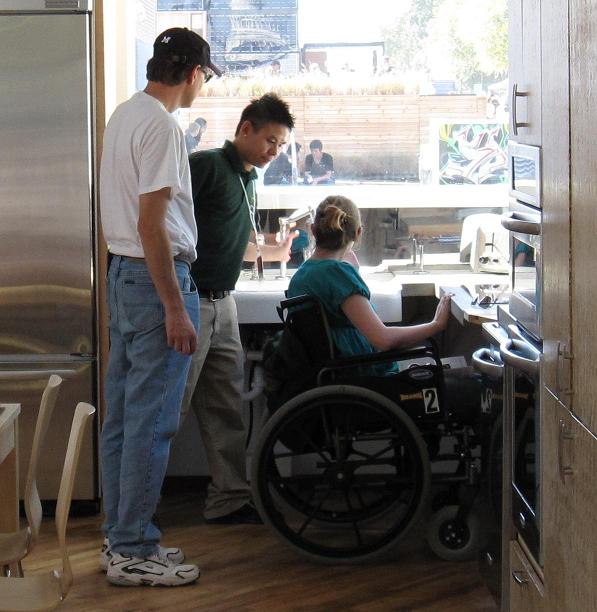
In addition to working hard, the team got the opportunity to interact with former school Alumni. Several area alumni attended for VIP tours and a nice dinner afterward. Some even flew in town to join.

Even the Chancellor came out to show his support for the project and give an update on the status of S&T.

The day wasn’t without difficulties however. After finalizing code and running tests, the automation team encountered several problems. One of the Pico computers crashed, a CF card went bad, the lighting system went down, a few sensors went bad, and without warning, the primary controller that the team had been using for the past year blew out. The team managed to get everything rerouted to the secondary controller and recompiled the code just before the 10:00pm deadline. The broken sensors and parts were replaced just in time as well.
And so that everybody can see how awesome we are, a few pictures…
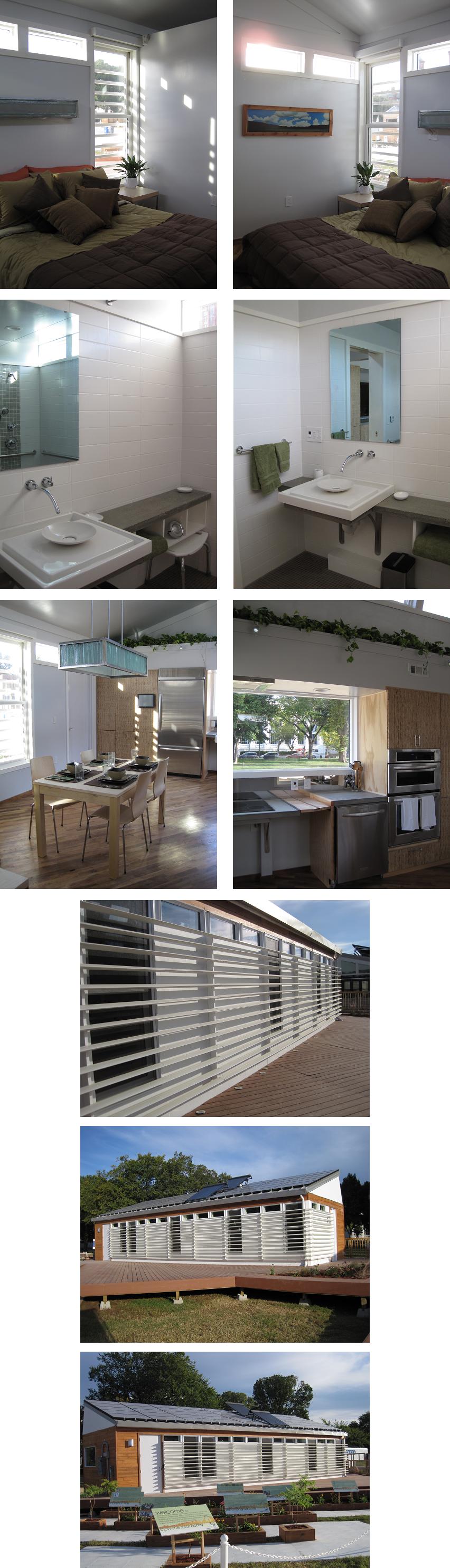
A few things went haywire after being tied in, but everything seems to be under control now. In an effort to conserve energy, the night team will now be working days and taking advantage of natural light (which they haven’t seen in quite some time).
As things come down to the wire, it looks like the team is in good shape. Maintaining an internet connection remains one of our bigger problems…so stay tuned for another post at a random time when we have one.
]]>